
Truck Financing in India 2026: EMI, Down Payment & Eligibility Explained
Truck financing in India has never been more accessible — or more consequential to get right. As of June 2026, a transporter looking to purchase a mid-range 25-tonne tipper or a 3.5-tonne light commercial vehicle can typically expect a loan amount ranging from ₹8 lakh to ₹35 lakh, with monthly EMIs starting at approximately ₹14,000 and going up to ₹60,000 depending on the vehicle price, down payment made, loan tenure, and the lender chosen. For India's fleet operators, owner-drivers, and first-time commercial vehicle buyers, understanding these numbers before signing a loan agreement can mean the difference between a profitable route and a cash-flow crisis.
The Indian commercial vehicle finance market has matured significantly over the past three years. Banks, non-banking financial companies (NBFCs), and manufacturer-linked finance arms now offer a range of structured products tailored to different buyer profiles. What was once a market dominated by informal moneylenders and high-interest loans has shifted into a competitive lending environment — but that competition does not automatically protect the uninformed buyer. Loan terms still vary sharply by lender, and a transporter who does not negotiate can end up paying 2%–4% more in interest annually than a comparable buyer who shops around.
Down Payment: The Leverage That Changes Everything
The truck down payment is the single most powerful variable a buyer controls before approaching a lender. Most banks and NBFCs in India require a minimum down payment of 15% to 25% of the on-road price for new commercial vehicles. For a truck priced at ₹20 lakh (on-road), that translates to a down payment of ₹3 lakh to ₹5 lakh — a figure that can be stretched or compressed depending on the lender's loan-to-value (LTV) ratio.
Consider a practical illustration: a ₹20 lakh truck financed with a 20% down payment (₹4 lakh) over five years at a 10% annual interest rate results in an EMI of approximately ₹34,000–₹35,000 per month. Increase the down payment to 30% (₹6 lakh), and the same tenure and interest rate brings the EMI down to roughly ₹30,000 per month — a saving of ₹4,000–₹5,000 every month, or close to ₹60,000 over the loan period. For a small fleet operator managing multiple vehicles, that margin matters.
The temptation among first-time buyers is to minimise the down payment and preserve working capital. That is not always the wrong call — particularly when freight volumes are predictable and monthly cash flow is strong. However, a lower down payment almost always attracts either a higher interest rate or a shorter eligible tenure, which can increase the monthly EMI burden even further. The prudent approach is to assess 6–12 months of projected freight income before fixing the down payment amount.
How Commercial Vehicle Loan EMI Is Calculated
Truck loan EMI is calculated using the standard reducing-balance method, the same formula applied across most Indian loan products. The key inputs are the principal loan amount (vehicle price minus down payment), the annual interest rate, and the loan tenure in months. What makes commercial vehicle finance slightly different from car loans is the processing fee structure, insurance bundling, and in some cases, balloon payment arrangements that alter the effective cost of the loan.
Typical Interest Rate Ranges (June 2026)
Nationalised banks such as SBI, Punjab National Bank, and Bank of Baroda currently offer commercial vehicle loans at 9%–11% per annum for borrowers with a clean credit profile and an established transport business. NBFCs — including Shriram Finance, Mahindra Finance, and Sundaram Finance — typically price truck loans at 11%–15% per annum, reflecting the higher credit risk they absorb by serving buyers with shorter credit histories or lower CIBIL scores. Manufacturer-linked finance arms such as Tata Motors Finance and Ashok Leyland Finance often run seasonal promotional schemes that can bring rates down to 8.5%–10% during vehicle launch periods or festive quarters.
Loan tenures for new trucks generally extend from three to seven years. Longer tenures reduce the monthly EMI but increase total interest outflow substantially. A ₹16 lakh principal (after down payment on a ₹20 lakh truck) at 10% interest costs approximately ₹4.5 lakh in total interest over five years but rises to nearly ₹6.3 lakh over seven years. The additional ₹1.8 lakh in interest expense is the true cost of extending the tenure for EMI comfort.
Bank Loan vs NBFC: Which Works for Your Transport Business?
The choice between a bank loan and an NBFC loan for commercial vehicle finance comes down to three factors: credit history, speed of disbursal, and flexibility on documentation. Banks offer lower interest rates but maintain stricter eligibility requirements. They prefer borrowers with a CIBIL score of 700 or above, at least two to three years of ITR filings, and an established business address. The approval process at most nationalised banks takes 7–14 business days — acceptable for planned fleet additions but unsuitable for urgent replacements.
NBFCs fill that gap with faster processing — often within 2–5 working days — and a more flexible view of creditworthiness. They are particularly relevant for owner-drivers or small transporters who do not have formal ITR documentation but can demonstrate cash flow through bank statements or freight contracts. The trade-off is the higher interest rate, which adds a meaningful cost over a five-year tenure. For fleet owners who can demonstrate strong financials, the bank route almost always produces a better overall cost.
New Truck Finance vs Used Truck Loan: The Profitability Equation
Financing a used truck introduces a different risk-reward calculation for the transporter. Used truck loans typically carry interest rates 2%–4% higher than equivalent new vehicle loans, and lenders generally cap tenure at three to four years rather than five to seven. The loan amount is also capped at a percentage of the assessed resale value rather than invoice price — usually 70%–80% of the valuation — which may require a larger initial down payment from the buyer.
That said, a used truck financed at a higher rate but purchased at 40%–50% of the new vehicle price can still offer a stronger return on investment for a transporter running a predictable route with consistent freight. The maintenance cost differential matters here — a used truck without a warranty adds unpredictable repair expenses that can erode EMI savings quickly. If you are evaluating this trade-off in depth, the Drivio Trucks New vs Used Truck Buying Guide covers operational and financial considerations across vehicle age brackets.
Truck Finance Eligibility: What Lenders Actually Check
Truck finance eligibility in India is assessed across five core parameters: age of the applicant (most lenders prefer 21–65 years), income and repayment capacity, credit score and repayment history, business vintage, and the type of commercial vehicle being purchased. Individual owner-drivers and partnership firms are both eligible for commercial vehicle loans, though the documentation trail differs.
Documentation Typically Required
Standard documents across most lenders include KYC documents (Aadhaar, PAN), proof of business (GST registration, trade licence), 3 years of ITR or audited accounts for bank loans, bank statements covering the last 6–12 months, a valid commercial driving licence (for owner-drivers), and the vehicle's proforma invoice. NBFCs often waive the ITR requirement if the applicant can produce sufficient bank statement evidence of freight-related income. A poor credit score does not disqualify a buyer from all lenders, but it will push the applicable interest rate upward and may reduce the eligible loan-to-value ratio.
One detail many first-time applicants overlook is the impact of an active truck loan on future borrowing capacity. A transporter who finances multiple vehicles simultaneously sees their total debt-to-income ratio rise, which can restrict eligibility for working capital loans, driver advance facilities, or fuel credit lines that most logistics businesses eventually need. Fleet expansion financing must be planned with this constraint in mind — adding trucks faster than the business can absorb EMI reduces the operator's financial headroom during freight market downturns. For a full breakdown of ongoing fleet costs, the Drivio Trucks Maintenance Cost Guide offers category-wise annual expense projections.
The Risk of Over-Financing: A Word of Caution
The availability of high loan-to-value financing — sometimes up to 90% of the vehicle's on-road price — can tempt buyers into purchasing a more expensive truck than their current freight volumes justify. An EMI-to-revenue ratio above 30%–35% is generally considered a stress indicator in commercial vehicle finance. An owner-driver running a medium-distance route generating ₹80,000–₹1 lakh per month in freight income should ideally keep the truck EMI below ₹25,000–₹28,000 to preserve adequate margin for fuel, maintenance, driver wages, and insurance.
Commercial vehicle loan interest rate fluctuations tied to the RBI's repo rate also introduce a risk for borrowers on floating-rate structures. Fixed-rate loans, while priced slightly higher upfront, provide the EMI certainty that most small transporters prefer. Understanding whether your loan is fixed or floating — and how a 1%–2% rate increase would affect monthly outflow — should be a standard part of any financing conversation with a lender.
What Type of Buyer Are You — and What Financing Strategy Fits?
For a first-time owner-driver, the priority is keeping the EMI manageable relative to projected freight income. A larger down payment — even if it strains initial capital — produces a lower monthly obligation and reduces the risk of default during slow freight periods. An NBFC with flexible documentation is often the practical first port of call, even if the interest rate is slightly higher.
A small fleet operator adding a second or third vehicle should approach a nationalised bank with well-prepared financials. The lower interest rate on a ₹20–₹30 lakh loan over five years can save ₹2–₹4 lakh compared to an NBFC product — money that flows directly into fleet profitability. Manufacturer finance arms are worth evaluating when a new model launch brings down promotional rates.
For a large fleet operator managing 10 or more vehicles, the strategic priority shifts to structuring repayments to avoid excessive debt-to-income exposure, negotiating processing fee waivers, and using fleet purchase volumes as leverage for custom rate agreements with lenders. A financial advisor familiar with transport business cash flows is an asset at this scale.
Regardless of buyer type, the most important step before signing any loan agreement is to compare at least three lenders, calculate the total interest outflow (not just the EMI), and ensure the repayment structure aligns with the seasonality of freight income on your specific routes. Check the latest truck loan offers, EMI options, and on-road prices for your preferred commercial vehicle on Drivio Trucks.
Popular Trucks
Tata Intra v10
₹7.28 Lakh Onwards
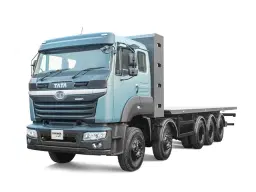
Tata Prima 35.K Auto Shift
Price to be announced
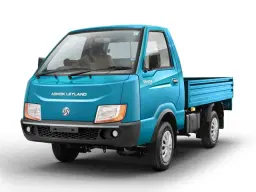
Ashok Leyland Saathi
₹6.50 Lakh Onwards

Mahindra Bolero PIK UP FB 1.3T - PS AC
₹10.48 Lakh Onwards
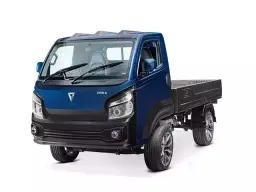
Omega Seiki M1ka
₹15.00 Lakh Onwards
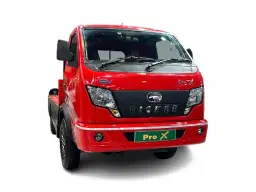
Eicher Pro x
₹17.49 Lakh Onwards
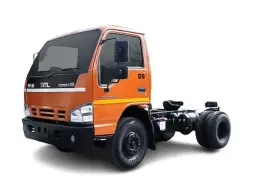
Swaraj Mazda Samrat GS Tipper Chassis
₹21.24 Lakh Onwards
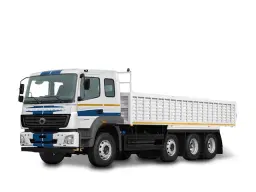
Bharat Benz 3123R
₹40.97 Lakh Onwards
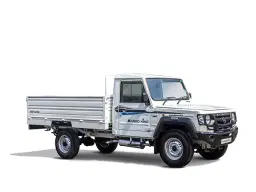
Force Kargo King
₹6.49 Lakh Onwards
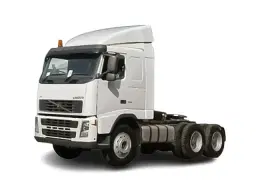
Volvo FM 440 6x4
₹70.00 Lakh Onwards