
Top CNG Commercial Vehicles in India 2026 – Best Models, Price & Complete Buying Guide
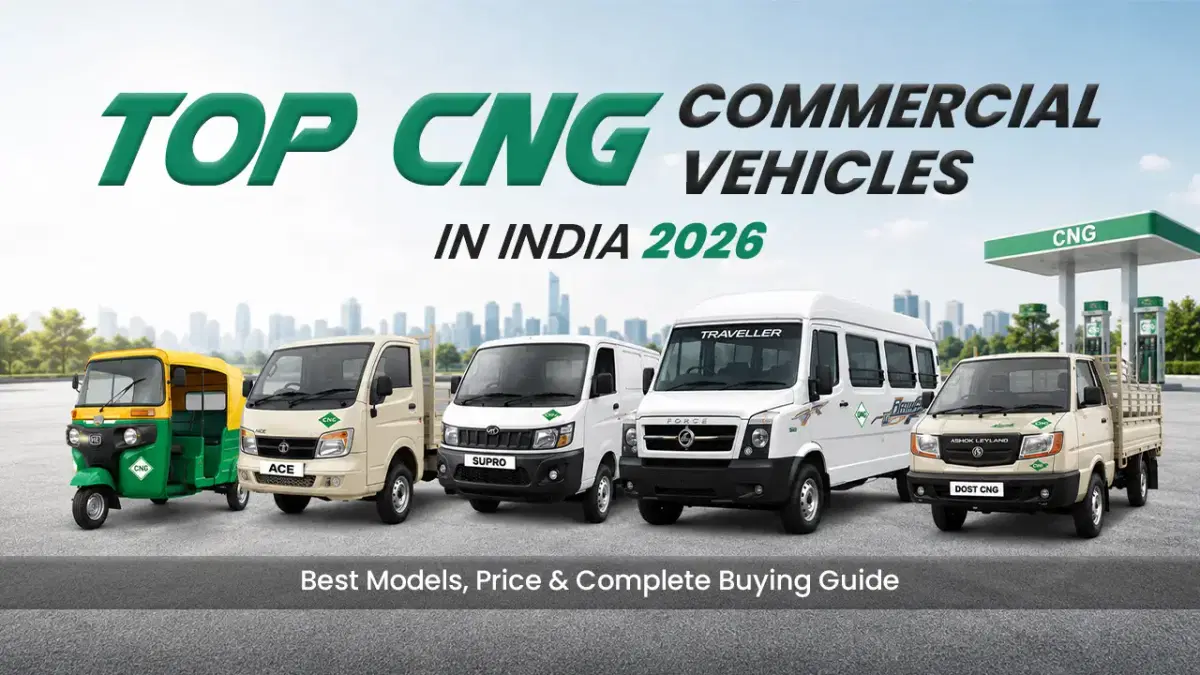
Best CNG Commercial Vehicles in India 2026 – Top Models, Price, Mileage & Complete Buying Guide
Introduction to CNG Commercial Vehicles in India
Compressed Natural Gas (CNG) has emerged as one of the most practical and cost-effective alternative fuels for commercial vehicles in India. With the rapid expansion of the City Gas Distribution (CGD) network across major cities and growing tier-2 and tier-3 markets, CNG has become a viable option for a wide range of commercial applications.
The primary advantages of CNG are significantly lower fuel costs and reduced emissions compared to diesel and petrol vehicles. Commercial vehicle operators can typically save between 40% and 55% on fuel expenses while benefiting from cleaner emissions and compliance with environmental regulations.
Today, the Indian CNG commercial vehicle market includes auto-rickshaws, cargo vans, mini trucks, buses, and light commercial vehicles from leading manufacturers such as Tata Motors, Mahindra, Ashok Leyland, Force Motors, Bajaj, and TVS.
Market Demand and Trends
The growth of CNG commercial vehicles has been driven by both regulatory mandates and strong economic incentives. Cities such as Delhi, Mumbai, and several NCR regions have encouraged widespread CNG adoption to combat urban air pollution.
The expansion of the Pradhan Mantri Urja Ganga pipeline and CGD networks has improved CNG accessibility across previously underserved regions, including Uttar Pradesh, Bihar, and West Bengal.
While CNG has traditionally dominated urban transport segments, manufacturers are increasingly exploring LNG-powered heavy trucks for long-haul logistics operations, addressing range limitations associated with conventional CNG vehicles.
CNG Commercial Vehicle Buying Guide
Assess CNG Infrastructure Availability
Before purchasing a CNG commercial vehicle, operators should carefully evaluate the availability of CNG filling stations along their intended routes.
Urban operators generally face no infrastructure challenges, but intercity and semi-urban operators should verify station accessibility before investing.
Understand Payload Impact
CNG cylinders add additional weight to the vehicle, which can slightly reduce net payload capacity compared to equivalent diesel models.
Depending on the vehicle category, this reduction may range between 50 kg and 150 kg.
Choose Factory-Fitted CNG Systems
Factory-fitted CNG systems are strongly recommended because they offer full manufacturer warranty coverage, enhanced safety standards, and better integration with vehicle electronics and engine management systems.
Tata Ace Gold CNG
The Tata Ace Gold CNG remains India's most popular CNG mini truck and is widely used for urban last-mile deliveries and small business logistics.
Its combination of fuel efficiency, payload capability, and Tata's extensive service network makes it a benchmark in the sub-1-tonne cargo segment.
Key Specifications
| Specification | Tata Ace Gold CNG |
|---|---|
| Category | Mini Truck |
| Payload Capacity | 750 kg |
| Mileage | 22–26 km/kg |
| Fuel Type | CNG |
| Price | ₹6–7 Lakh |
Mahindra Supro CNG Van
The Mahindra Supro CNG Van is designed for courier services, parcel delivery, FMCG distribution, and small-scale logistics operations.
Its enclosed cargo body provides excellent cargo protection while maintaining impressive fuel efficiency.
Key Specifications
| Specification | Mahindra Supro CNG Van |
|---|---|
| Payload Capacity | 500 kg |
| Mileage | 24–28 km/kg |
| Body Type | Closed Cargo Van |
| Fuel Type | CNG |
| Price | ₹6.5–8 Lakh |
Force Traveller CNG
The Force Traveller CNG is a popular passenger transport vehicle used extensively in employee transportation, school transport, and corporate shuttle services.
Its spacious cabin and lower operating costs make it an attractive alternative to diesel-powered people movers.
Key Specifications
| Specification | Force Traveller CNG |
|---|---|
| Passenger Capacity | 12–17 Seats |
| Mileage | 18–22 km/kg |
| Fuel Type | CNG |
| Application | Passenger Transport |
| Price | ₹16–20 Lakh |
Bajaj RE CNG Auto Rickshaw
The Bajaj RE CNG remains India's highest-volume passenger three-wheeler and is known for its excellent fuel economy, reliability, and low operating costs.
It continues to dominate urban passenger transport markets across the country.
Key Specifications
| Specification | Bajaj RE CNG |
|---|---|
| Vehicle Type | Auto Rickshaw |
| Mileage | 35–40 km/kg |
| Fuel Type | CNG |
| Application | Passenger Transport |
| Price | ₹2.1–2.5 Lakh |
Ashok Leyland Dost CNG
The Ashok Leyland Dost CNG combines strong payload capability with the cost advantages of CNG fuel, making it suitable for intercity and peri-urban cargo operations.
Its proven platform and widespread service network ensure dependable performance for commercial operators.
Key Specifications
| Specification | Ashok Leyland Dost CNG |
|---|---|
| Payload Capacity | 1.25 Tonnes |
| Fuel Type | CNG |
| Application | Cargo Transport |
| Price | ₹9.5–11.5 Lakh |
Tata LP 709 CNG Bus
The Tata LP 709 CNG Bus is one of India's most widely deployed CNG-powered buses and serves educational institutions, state transport undertakings, and corporate fleets.
Its proven reliability and comprehensive service support make it a benchmark in the CNG bus segment.
Key Specifications
| Specification | Tata LP 709 CNG |
|---|---|
| Passenger Capacity | 35 Seats |
| Mileage | 4–5 km/kg |
| Fuel Type | CNG |
| Application | Institutional & Public Transport |
| Price | ₹28–35 Lakh |
Price Comparison
| Model | Price Range |
|---|---|
| Bajaj RE CNG | ₹2.1–2.5 Lakh |
| Tata Ace Gold CNG | ₹6–7 Lakh |
| Mahindra Supro CNG Van | ₹6.5–8 Lakh |
| Ashok Leyland Dost CNG | ₹9.5–11.5 Lakh |
| Force Traveller CNG | ₹16–20 Lakh |
| Tata LP 709 CNG Bus | ₹28–35 Lakh |
CNG vs Diesel vs Electric Commercial Vehicles
CNG Vehicles
- 40–55% Lower Fuel Costs Than Diesel
- Cleaner Emissions
- Suitable for Urban & Semi-Urban Routes
- Quick Refueling
Diesel Vehicles
- Higher Payload Capacity
- Longer Range
- Better Highway Infrastructure
- Preferred for Long-Haul Operations
Electric Vehicles
- Lowest Running Costs
- Zero Tailpipe Emissions
- Ideal for Fixed Urban Routes
- Dependent on Charging Infrastructure
Best CNG Commercial Vehicles by Application
Best CNG Mini Truck
Tata Ace Gold CNG remains the leading choice for urban cargo transportation.
Best CNG Cargo Van
Mahindra Supro CNG Van combines efficiency, practicality, and affordability.
Best CNG Passenger Vehicle
Force Traveller CNG offers excellent economics for passenger transport operations.
Best CNG Auto Rickshaw
Bajaj RE CNG continues to dominate India's three-wheeler passenger segment.
EMI and Financing
CNG commercial vehicles generally carry a premium of ₹30,000 to ₹1.5 lakh over equivalent diesel variants. However, fuel savings typically recover this premium within 12–24 months for high-utilization operators.
Commercial vehicle financing is widely available through banks, NBFCs, and manufacturer-backed finance programs.
Future Trends in CNG Commercial Vehicles
The continued expansion of India's City Gas Distribution network will make CNG accessible to a larger number of cities and commercial operators.
Factory-fitted CNG options are expected to become increasingly common in medium and heavy commercial vehicle segments as highway CNG infrastructure improves.
Green CNG (biomethane produced from agricultural waste) is also emerging as a promising alternative that could significantly reduce lifecycle emissions.
Meanwhile, LNG-powered trucks are expected to play an important role in long-haul logistics where conventional CNG faces range limitations.
Final Verdict
CNG commercial vehicles offer one of the strongest financial propositions among non-electric commercial transport solutions in India.
For operators in urban and peri-urban areas with established CNG infrastructure, vehicles such as the Tata Ace Gold CNG, Mahindra Supro CNG Van, Ashok Leyland Dost CNG, and Bajaj RE CNG can significantly reduce operating costs while maintaining reliability and practicality.
Businesses that are not yet utilizing CNG in CNG-served regions should seriously evaluate switching or upgrading their fleets, as the cost savings and environmental benefits are increasingly difficult to ignore in 2026.




Popular Trucks
Tata Intra v10
₹7.28 Lakh Onwards
Tata Prima 35.K Auto Shift
Price to be announced
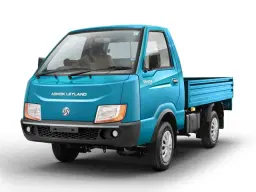
Ashok Leyland Saathi
₹6.50 Lakh Onwards
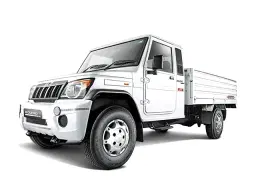
Mahindra Bolero PIK UP FB 1.3T - PS AC
₹10.48 Lakh Onwards
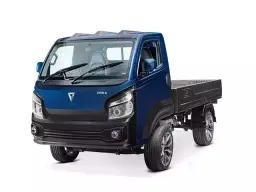
Omega Seiki M1ka
₹15.00 Lakh Onwards
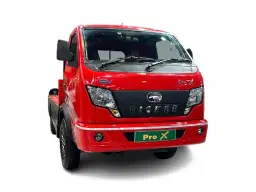
Eicher Pro x
₹17.49 Lakh Onwards
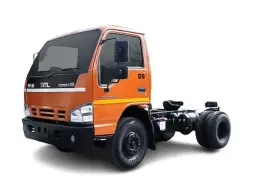
Swaraj Mazda Samrat GS Tipper Chassis
₹21.24 Lakh Onwards
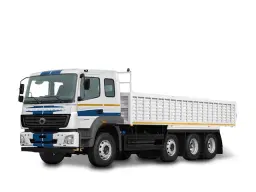
Bharat Benz 3123R
₹40.97 Lakh Onwards
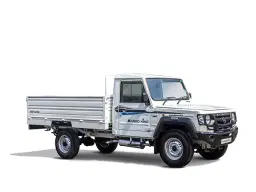
Force Kargo King
₹6.49 Lakh Onwards
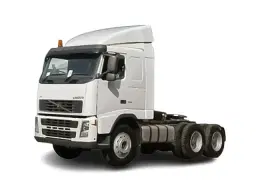
Volvo FM 440 6x4
₹70.00 Lakh Onwards