
Ashok Leyland Dost+ vs Tata Intra V30: Which Pickup Truck Is Better for Your Business in 2026?
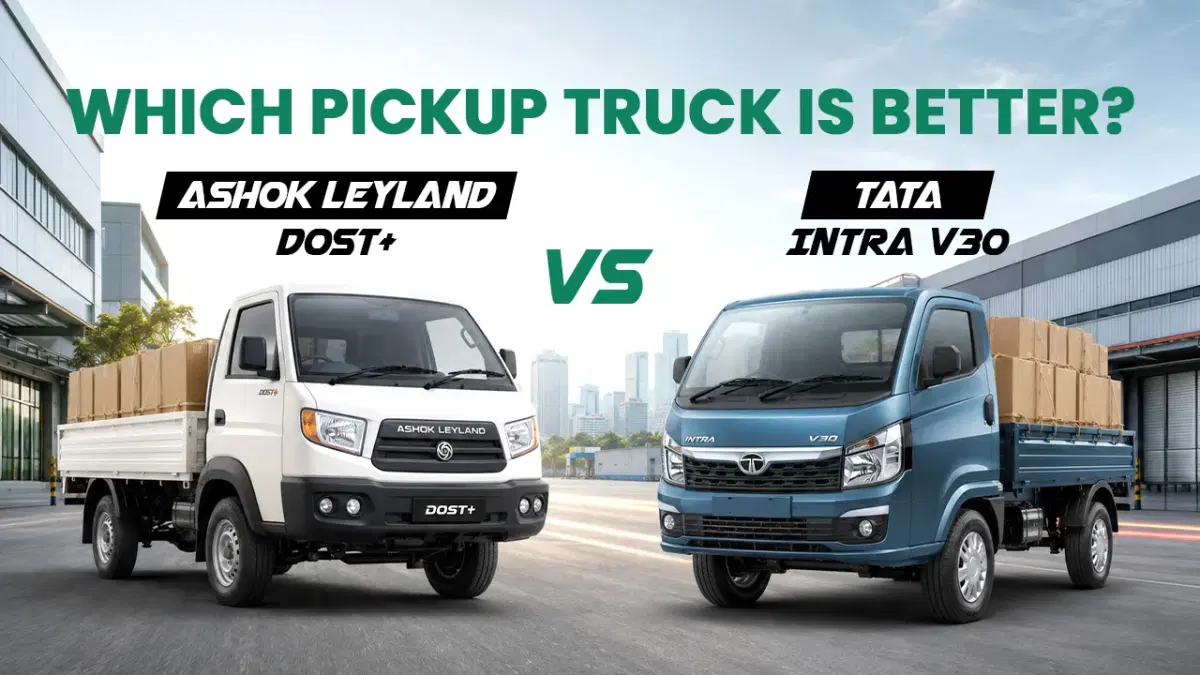
Ashok Leyland Dost+ vs Tata Intra V30 is the comparison small-business owners in India are searching for as both pickups compete hard in the sub-8.5-lakh mini truck segment this July 2026. The Ashok Leyland Dost+ carries an ex-showroom price of roughly ₹7.75 lakh to ₹8.25 lakh, while the Tata Intra V30 starts a shade lower at approximately ₹7.66 lakh, climbing to around ₹8.49 lakh for the fully-loaded XT variant. For fleet operators, first-time buyers and delivery businesses in India, the decision usually comes down to payload, mileage and how much the truck actually costs to run every month, not just its sticker price.
Ashok Leyland Dost+ vs Tata Intra V30: Price and Positioning
On paper, the two trucks sit almost on top of each other. The Ashok Leyland Dost Plus price band of ₹7.75-8.25 lakh overlaps closely with the Tata Intra V30 price of ₹7.66-8.49 lakh, so neither vehicle enjoys a decisive advantage at the showroom counter. Once registration, insurance and a commercial permit are added, on-road prices in Delhi typically land around ₹8.7-9.0 lakh for the Dost+ and ₹8.6-8.9 lakh for the Intra V30, while Mumbai buyers can expect on-road figures roughly ₹20,000-30,000 higher on both trucks because of steeper RTO tax. These figures vary by city, body configuration, insurance provider and dealer charges, so treat them as indicative rather than final. On a standard commercial pickup truck EMI structure of 20% down payment over 60 months at 11% interest, the Dost+ works out to roughly ₹13,500 a month against about ₹13,300 for the Intra V30 — a gap small enough that most buyers will let payload and running cost decide the winner instead.
Engine Performance and Drivability
The Dost+ runs a 1478cc, 3-cylinder BS6 diesel producing around 70 hp at 3,300 rpm and 170 Nm of torque between 1,600-2,400 rpm, mated to a 5-speed manual gearbox. The Intra V30 counters with a 1496cc, 4-cylinder BS6 diesel that also makes about 70 hp, but at a higher 4,000 rpm, with peak torque of 140 Nm arriving between 1,800-3,000 rpm. On paper the horsepower numbers are near-identical, but the Dost+'s three-cylinder unit produces its torque lower down the rev range, which shows up as stronger pull from a standstill when the load bed is full — useful when pulling away from a signal on a Mumbai flyover with a fully loaded deck. The Intra V30's four-cylinder motor, in contrast, feels smoother and revs more willingly once moving, which suits stop-start city delivery routes where the driver is constantly shifting gears. Neither engine feels strained on broken roads or monsoon-damaged stretches, though the Dost+'s official gradeability of 32% trails the Intra V30's stronger 37%, meaning the Tata holds momentum slightly better on steep ghat sections and multi-level flyover ramps.
Dost Plus vs Intra V30 Payload and Loading Area
This is where the Dost+ pulls ahead decisively. Ashok Leyland rates the Dost+ at a 1500 kg payload against a GVW of 2,805 kg, while the Intra V30's payload capacity is rated at 1300 kg against a lighter 2,565 kg GVW. That 200 kg gap matters for businesses moving construction material, dairy crates or bulk FMCG stock, where every extra kilo reduces the number of trips needed per day. The Dost+'s load body measures roughly 2,645mm x 1,620mm x 440mm against the Intra V30's slightly longer 2,690mm x 1,607mm deck, so the Tata edges out on length while the Ashok Leyland wins on rated weight. For businesses hauling dense, heavy cargo — cement bags, water bottle crates, industrial hardware — the Dost+'s higher payload makes it the more efficient 1.5 tonne pickup truck choice. For bulkier but lighter cargo like furniture or loosely packed e-commerce boxes, the Intra V30's marginally longer deck and tighter 5.25-metre turning radius make it noticeably easier to manoeuvre through congested wholesale markets and narrow village lanes.
Mileage and Monthly Running Cost
Ashok Leyland claims 19.6 kmpl for the Dost+, while Tata Motors' figure for the Intra V30 sits at around 14 kmpl. Neither number holds up once a truck is running fully loaded through Indian traffic, so owners can realistically expect somewhere in the 15-17 kmpl range for the Dost+ and 12-14 kmpl for the Intra V30, depending on load and route. At a diesel price of ₹95 per litre and 3,000 km of monthly running, the Dost+ (at roughly 16 kmpl) works out to about 187.5 litres, or close to ₹17,800 a month in fuel. The Intra V30, running at roughly 13 kmpl under similar conditions, needs about 231 litres, pushing monthly fuel cost to nearly ₹21,900. That's a difference of over ₹4,000 every month, or close to ₹49,000 a year, almost entirely down to the Dost+'s lighter three-cylinder engine and taller gearing.
Cabin Comfort, Features and Daily Usability
Both trucks keep things functional rather than plush, which is expected in this price band. The Intra V30 comes standard with Electric Power Assisted Steering (EPAS) across its range, which noticeably reduces driver fatigue during 8-10 hour shifts, especially while manoeuvring in tight loading bays. The Dost+ offers power steering only on its higher LX variant, meaning base-spec buyers are stuck with a heavier manual setup. Both trucks offer a digital instrument cluster, mobile charging points and adjustable driver seating, though the Dost+'s cabin feels marginally roomier thanks to its wider tyres and sliding rear windows. For an owner-driver clocking long hours daily, the Intra V30's lighter steering effort is the more noticeable everyday comfort advantage, even if the Dost+ compensates with a bigger tyre footprint on rough roads.
Maintenance, Service Network and Ownership Cost
Tata Motors' countrywide service reach is broader than Ashok Leyland's, which typically translates into shorter wait times for spares and routine servicing, particularly in smaller towns. Ashok Leyland, however, backs the Dost+ with a notably longer 5-year or 2,00,000 km warranty, compared to the Intra V30's standard 2-year or 72,000 km cover (extendable on higher Gold variants to 3 years or 1 lakh km). Routine servicing costs on both trucks are broadly comparable and depend heavily on the local dealer, so treat any specific figure as an approximate estimate rather than a fixed cost. Clutch and tyre replacement cycles tend to favour the Dost+ slightly given its lower-revving engine, while resale value on the Intra V30 benefits from Tata's larger secondhand commercial vehicle market.
Ashok Leyland Dost+ vs Tata Intra V30 Comparison Table
Which Pickup Truck Is Better for Your Business?
For maximum payload and lower fuel cost, the Dost+ is the clear pick, and it also wins on rough-road and construction-supply routes where its extra 200 kg of rated capacity and stronger low-end torque reduce the number of trips needed daily. The Intra V30 is better suited to city delivery work and owner-drivers who value lighter steering effort, and first-time buyers leaning on Tata's wider service network for peace of mind will find that reassuring too. Buyers chasing long-term resale value may also lean Intra V30, given Tata's stronger secondhand market presence. Weighing verified specifications, real-world running costs and ownership economics together, the Ashok Leyland Dost+ comes out as the stronger overall business choice thanks to its higher payload, better fuel economy and a warranty that's more than double the Intra V30's standard cover — though a business running tight city routes with an owner-driver behind the wheel every day may still find the Intra V30's lighter controls worth the trade-off. Buyers cross-shopping this segment can also look at the Tata Intra V50 for extra payload, or the Mahindra Bolero Maxx Pik-Up and Ashok Leyland Bada Dost i4 if a bigger load body is the priority; the Mahindra Jeeto Plus remains worth a look for lighter, more compact delivery runs. Check the on-road price and EMI for the Ashok Leyland Dost+ or Tata Intra V30 in your city on Drivio.







Popular Trucks
Tata Intra v10
₹7.28 Lakh Onwards
Tata Prima 35.K Auto Shift
Price to be announced
Ashok Leyland Saathi
₹6.50 Lakh Onwards
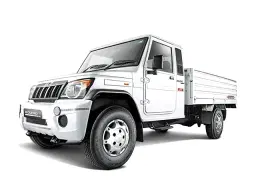
Mahindra Bolero PIK UP FB 1.3T - PS AC
₹10.48 Lakh Onwards
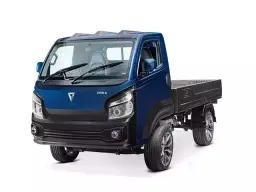
Omega Seiki M1ka
₹15.00 Lakh Onwards
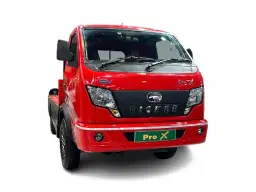
Eicher Pro x
₹17.49 Lakh Onwards
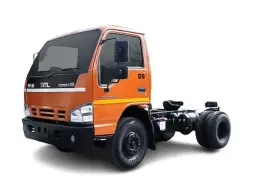
Swaraj Mazda Samrat GS Tipper Chassis
₹21.24 Lakh Onwards
Bharat Benz 3123R
₹40.97 Lakh Onwards
Force Kargo King
₹6.49 Lakh Onwards
Volvo FM 440 6x4
₹70.00 Lakh Onwards