
Best 3-Wheeler Goods Carriers for Small Businesses: 7 Picks

The best 3-wheeler goods carriers in India now start at about ₹2.21 lakh ex-showroom for a diesel Piaggio Ape Xtra and climb to roughly ₹4.6 lakh for a top-spec electric loader like the Mahindra Zor Grand. For a small trader, dairy supplier or parcel runner, that choice decides whether the vehicle pays for itself in two years or four. This guide sorts the field by what you actually haul, how far you drive daily and what you can afford up front, as of November 2026.
Which 3-Wheeler Goods Carriers Make Sense for Small Businesses
Start with payload and body type, not brand. Most cargo three-wheelers in this segment carry roughly 500 kg to 700 kg on the deck, and the Euler HiLoad, at about ₹4.2 lakh ex-showroom, claims close to 700 kg among electric loaders. On the diesel side, Piaggio’s newer Ape Xtra 600 is priced at ₹2.88 lakh (ex-showroom, Maharashtra) and the Xtra Bada 700 at ₹3.45 lakh. Vegetable sellers, FMCG distributors and hardware traders should confirm the RC-certified payload, because dealers often quote gross vehicle weight (GVW) instead. That gap is the quickest route to an overloaded vehicle and an RTO challan.
Diesel and CNG: Lowest Entry Price, Proven Service
The Piaggio Ape Xtra and Bajaj Maxima C remain the default pick in mandis and village routes where a charging point is a luxury. The cheapest Ape Xtra starts near ₹2.21 lakh, while the Maxima C is listed at about ₹2.83–2.84 lakh, so Piaggio wins on sticker price and Bajaj charges for its dealer reach and resale value. At diesel of ₹95 per litre and a loaded mileage of about 20 kmpl, fuel costs close to ₹4.75 per km. On Indian roads with frequent stops and loaded gradients, mileage can dip by 2–3 kmpl, so budget for the lower end. A driver covering 100 km a day for 26 days burns about 130 litres, which means roughly ₹12,350 a month on fuel alone. For short runs under 50 km a day, that bill is still manageable, and the lower purchase price keeps diesel competitive.
Electric Cargo Three-Wheelers: Higher Price, Far Lower Running Cost
Electric loaders are no longer pilot-fleet curiosities. The Piaggio Ape E Xtra FX costs ₹3.12–3.20 lakh ex-showroom, with a 975 kg GVW and a rated 115–120 km per charge. The Bajaj WEGO C90, launched in April 2026 at ₹3.87–4.34 lakh, claims up to 207 km from a 12.1 kWh pack. The Bajaj Maxima XL Cargo E-TEC 12.0 (₹4.18–4.22 lakh) lists a 183 km certified range and a five-year, 1.2 lakh km warranty, while the TVS King Kargo HD EV at ₹3.85 lakh and the Mahindra Zor Grand at ₹4.19–4.59 lakh complete the mainstream field.
Running cost is where the maths changes. Published estimates for these models cluster around ₹0.60 to ₹1 per km, so the same 2,600 km month costs roughly ₹1,600 to ₹2,600 against ₹12,350 for diesel. Even with a purchase premium of about ₹1 lakh over a comparable diesel, the extra spend is likely recovered within 12 to 15 months of 100 km-a-day work. The catch is range anxiety on loaded highway trips and the need for a reliable overnight charging point, so electric suits city and peri-urban routes far better than long intercity hauls.
Piaggio Ape vs Bajaj Maxima: The Closest Rivals
The most direct rivalry in this segment is Piaggio against Bajaj. The Ape range undercuts the Maxima on price and offers more body options, including the Xtra 600 and Bada 700 for heavier loads. The Maxima answers with a long warranty on its electric version and a strong service footprint, which matters when a breakdown means a lost day of income. An owner-driver watching every rupee will likely prefer the Piaggio; a fleet owner who hires drivers and needs uptime has a good case for Bajaj.
On-Road Price and EMI: What You Will Actually Pay
On-road price in Delhi or Mumbai will likely sit 8–10% above the ex-showroom figure once RTO, insurance and handling charges are added, though state road-tax waivers on EVs can trim that gap for electric buyers. On a standard 20% down, 60-month loan at 11%, a ₹2.21 lakh Ape Xtra costs about ₹3,840 a month in EMI, a ₹3.2 lakh Ape E Xtra FX about ₹5,570, and a ₹4.2 lakh loader about ₹7,310. Add fuel or charging, and the diesel owner’s monthly outgo lands near ₹16,200, while an electric owner financing ₹3.2 lakh pays closer to ₹7,600. Buyers who may later step up to four-wheelers can read our Tata Ace EV vs Ace Gold Diesel comparison and the Mahindra Jeeto coverage before committing.
Payload, Warranty and Resale: Details That Decide Profit
Beyond price, three details separate a profitable purchase from a regretful one. First, battery warranty: look for at least five years or 1.2 lakh km, as Bajaj offers on the Maxima XL, because a pack replacement can cost a large share of the vehicle’s value. Second, resale: diesel Ape and Maxima units will likely find buyers quickly in the used market, while electric resale is still taking shape. Third, financing: lenders to small fleet buyers often cover around 80% of the ex-showroom price, which is why the 20% down payment used above is a realistic planning figure.
Which One Should You Buy?
For city routes under 100 km a day, the Piaggio Ape E Xtra FX at ₹3.12 lakh or the Bajaj WEGO C90 for longer shifts offers the strongest return. For villages, mandis and routes without charging, the diesel Piaggio Ape Xtra remains the practical purchase, with the Maxima C the safer bet if service reach matters more than price. Whichever of the 3-wheeler goods carriers you shortlist, verify the RC payload and test a loaded vehicle on your own route before paying a token amount. Then check the on-road price and EMI for the Piaggio Ape E Xtra FX, or whichever model you shortlist, in your city on Drivio, since dealer offers and state incentives vary more than most buyers expect.




Popular Trucks
Tata Intra v10
₹7.28 Lakh Onwards
Tata Prima 35.K Auto Shift
Price to be announced
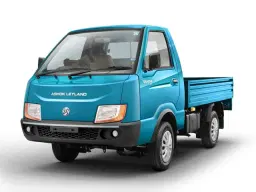
Ashok Leyland Saathi
₹6.50 Lakh Onwards
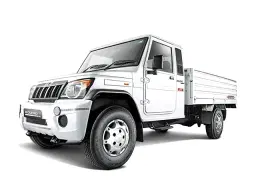
Mahindra Bolero PIK UP FB 1.3T - PS AC
₹10.48 Lakh Onwards
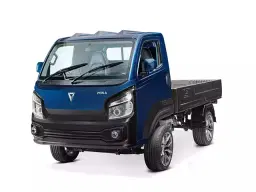
Omega Seiki M1ka
₹15.00 Lakh Onwards
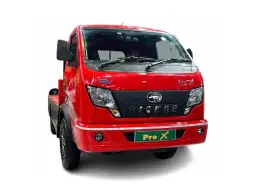
Eicher Pro x
₹17.49 Lakh Onwards
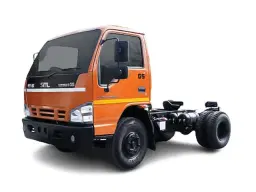
Swaraj Mazda Samrat GS Tipper Chassis
₹21.24 Lakh Onwards
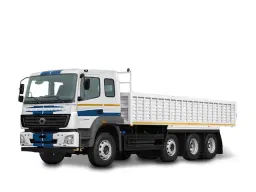
Bharat Benz 3123R
₹40.97 Lakh Onwards
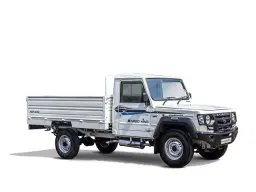
Force Kargo King
₹6.49 Lakh Onwards
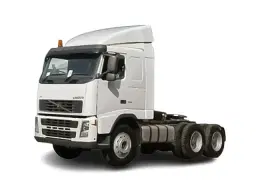
Volvo FM 440 6x4
₹70.00 Lakh Onwards