
Truck Mileage: 5 Factors That Decide Your Monthly Diesel Bill

Truck mileage is the biggest controllable cost in a commercial vehicle’s budget, and in November 2026 the gap between a brochure’s 22 kmpl and a loaded day on the road is costing Indian operators thousands of rupees a month. Take the Tata Ace Gold+ Diesel, which starts at ₹5.52 lakh ex-showroom in India. At a realistic 17 kmpl on a 100 km daily run, it burns about ₹14,500 of diesel every month, which is more than the EMI on the truck itself.
Why Truck Mileage Claims and Reality Never Match
Listed figures for the Ace Gold+ Diesel hover around 22 kmpl, but operators running full loads through mixed traffic usually report 16–19 kmpl. That gap is not a defect. Claimed numbers come from a controlled test with a light load and steady speeds. An Indian delivery route adds potholes, speed breakers, red lights and a payload that is rarely below 700 kg. Five factors explain most of the difference, and the owner can influence every one of them.
Payload and overloading
The Ace Gold+ is rated for about 900 kg of payload, and a rough field rule is that every extra 100 kg costs 0.5 to 1 kmpl in stop-go traffic. Overloading beyond the GVW is worse. It strains the clutch, wears tyres unevenly and invites a challan, and all of that shows up in the monthly bill. Running at 85–90 per cent of rated payload gives the best balance between earnings per trip and diesel burned per kilometre.
Driving style and route
A small turbo-diesel like the Ace’s 702 cc unit does its best work in the middle of the torque curve. Lugging it in a high gear or revving it hard in a low one both waste diesel. Highway runs at a steady 50–60 km/h often return 2–3 kmpl more than dense city routes with constant braking and restarting. Planning deliveries to avoid peak-hour crawls is the cheapest fuel saving available.
Tyres, alignment and servicing
Tyres running 5–8 psi below the placard pressure raise rolling resistance and commonly cost a few per cent in fuel. A choked air filter, worn injectors and dragging brakes quietly do the same. Following the service schedule in the owner’s manual matters more than any additive. The Ace Gold+ uses Lean NOx Trap technology that removes the need for Diesel Exhaust Fluid, so there is no AdBlue top-up to budget for.
Idling and waiting time
Mini trucks spend long hours at mandis, godowns and loading bays. A small diesel burns roughly half a litre an hour at idle, so two hours of daily waiting adds about ₹95 a day, or nearly ₹2,500 a month. Switching the engine off during loading is a habit that pays for itself within the first week.
Segment and body type
Heavier LCVs in the 2.5-litre diesel class commonly deliver 11–13 kmpl loaded, which looks poor next to a mini truck. The right yardstick, though, is cost per tonne-km. A truck returning 12 kmpl with 2.5 tonnes aboard spends about ₹3.2 per tonne-km at ₹95 a litre. A mini truck managing 17 kmpl with 900 kg spends about ₹6.2. Match the vehicle to your usual load, not to the kmpl headline.
Monthly Fuel Cost: The Maths at ₹95 a Litre
Take a mini truck covering 100 km a day for 26 working days, or 2,600 km a month, with diesel at about ₹95 a litre. At the claimed 22 kmpl, that is roughly 118 litres, or ₹11,200. At a realistic 17 kmpl it rises to about 153 litres and ₹14,500. Overloaded and stuck in stop-go traffic at 14 kmpl, the same route eats 186 litres and ₹17,600. The spread between best and worst case is about ₹6,400 a month, or close to ₹77,000 a year.
For context, a 20 per cent down payment and a 60-month loan at 11 per cent on the ₹5.52 lakh ex-showroom price works out to an EMI near ₹9,600. The on-road price in Delhi or Mumbai will be approximately ₹5.9–6.1 lakh once registration, insurance and road tax are added. For many owners, the fuel line outruns the loan instalment.
Ace Gold+ vs Mahindra Jeeto on Running Cost
Mahindra’s Jeeto is the nearest rival. The Jeeto Plus uses a 625 cc engine, lists around 21.2 kmpl and costs roughly ₹4.4–5.1 lakh ex-showroom. That undercuts the Ace Gold+ by anywhere from ₹50,000 to ₹1 lakh. The catch is payload: about 715 kg against the Ace’s 900 kg, or roughly a fifth less.
If your route is short, light and urban, the Jeeto’s lower price and similar claimed efficiency make sense. If you fill the deck on every trip, the Ace Gold+ carries about a quarter more per litre burned and needs fewer trips, so it wins on cost per kilogram moved. Readers weighing the electric option can also see our Tata Ace EV vs Ace Gold Diesel comparison, and our mini truck price in India guide covers the wider price field.
Verdict: Measure Before You Buy
Treat truck mileage as a number you measure, not one you read off a brochure. Fill the tank, reset the trip meter, and log kilometres against litres across three full loaded weeks. That figure, not the claimed 22 kmpl, belongs in your business plan. Keep payload close to rated capacity, hold tyre pressure at the placard value and cut idling at loading points, and a 17 kmpl truck can likely move toward 19.
For most small fleet owners and first-time buyers, the Tata Ace Gold+ Diesel is the stronger buy. It carries more, avoids DEF costs and keeps the monthly diesel bill predictable. Check the on-road price and EMI for the Tata Ace Gold+ Diesel in your city on Drivio before you sign the booking form.










Popular Trucks
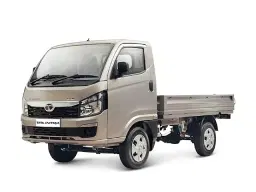
Tata Intra v10
₹7.28 Lakh Onwards
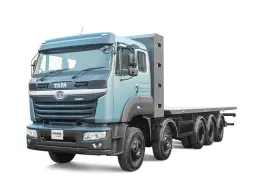
Tata Prima 35.K Auto Shift
Price to be announced
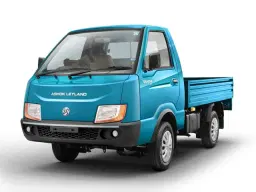
Ashok Leyland Saathi
₹6.50 Lakh Onwards

Mahindra Bolero PIK UP FB 1.3T - PS AC
₹10.48 Lakh Onwards

Omega Seiki M1ka
₹15.00 Lakh Onwards
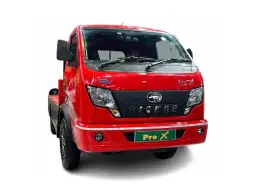
Eicher Pro x
₹17.49 Lakh Onwards

Swaraj Mazda Samrat GS Tipper Chassis
₹21.24 Lakh Onwards
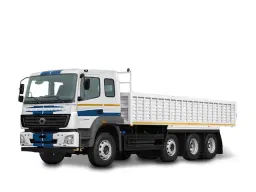
Bharat Benz 3123R
₹40.97 Lakh Onwards
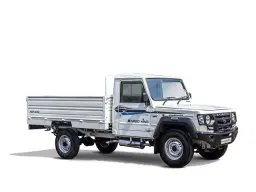
Force Kargo King
₹6.49 Lakh Onwards
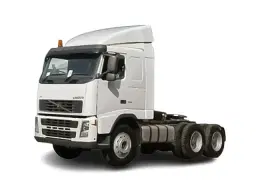
Volvo FM 440 6x4
₹70.00 Lakh Onwards