
How Credit Score Affects Commercial Vehicle Financing Rates
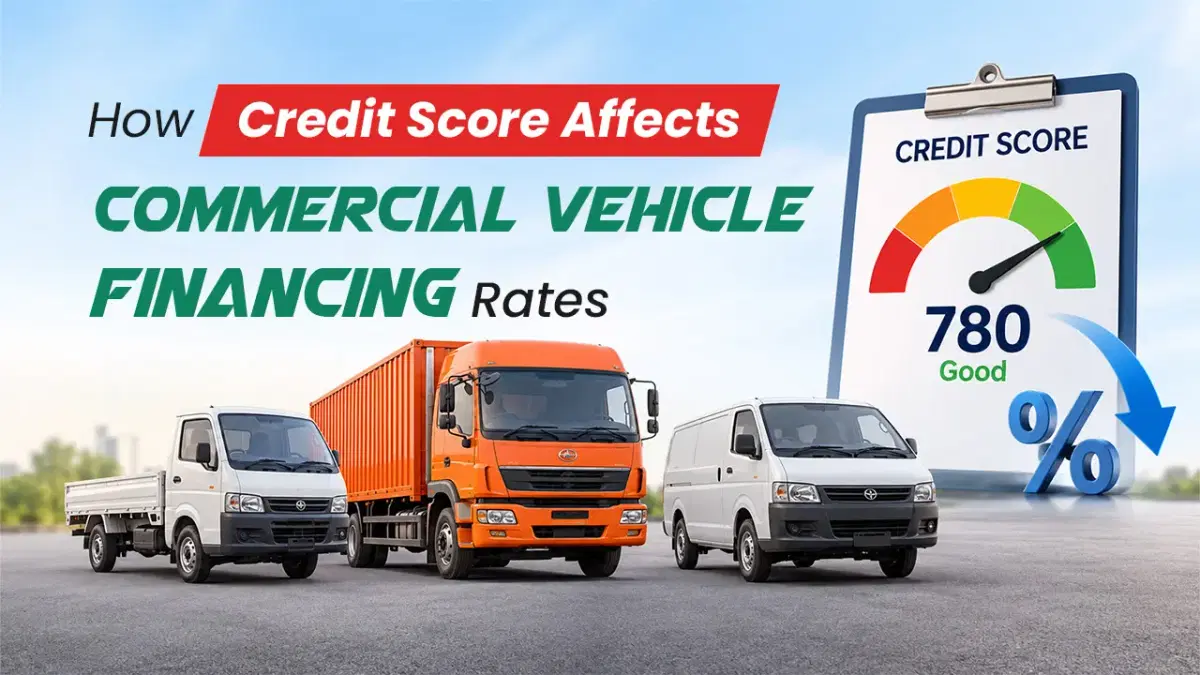
The way credit score affects commercial vehicle financing in India is easiest to see in rupees: on a ₹10 lakh ex-showroom truck, a CIBIL score near 750 instead of 650 can add roughly ₹73,000 to your five-year interest bill. Lenders judge your repayment history before they look at your truck, your route or your freight contracts. For an operator planning a purchase in November 2026, the score decides the rate, the down payment and sometimes whether the file moves at all.
How credit score affects commercial vehicle financing
Lenders in India use the CIBIL score, which runs from 300 to 900, as shorthand for how you have handled past credit. In commercial vehicle finance it moves three levers: whether you are approved, the interest rate you get and how much of the truck’s value the lender will fund. Axis Bank, for instance, lists new commercial vehicle loans at 10.30% to 14.30% and used vehicles at 11.30% to 16.30%, and your score largely decides where you land inside that band.
Run the numbers on a ₹10 lakh truck with the standard 20% down payment of ₹2 lakh, leaving an ₹8 lakh loan over 60 months. At 11%, typical for a strong profile, the EMI is about ₹17,400 and total interest about ₹2.44 lakh. At 14%, closer to what a weaker score attracts, the EMI rises to about ₹18,600 and interest to ₹3.17 lakh. That ₹1,220 monthly gap equals roughly 13 litres of diesel at ₹95 a litre, every month, for five years. Add insurance, registration and fastag, and the on-road price in Delhi or Mumbai will likely be around ₹10.6 lakh, so keep a reserve for those costs.
Minimum CIBIL score for a commercial vehicle loan in India
There is no single legal cut-off, and that is where many operators get confused. Bajaj Finance publishes a minimum CIBIL score of 625 for its new commercial vehicle loan, with rates starting at 9.50%. Shriram Finance puts its starting rate at 10% and says transport-sector NBFCs often assess the wider business rather than the score alone. Banks are stricter: 700 or above is the usual expectation, along with one to two years of business vintage and documented income.
As a working rule of thumb, a score of 750 or more earns the sharpest pricing and the fastest approval. Between 700 and 749 you will likely be approved, with limited room to negotiate. From 625 to 699, expect a higher rate and a bigger down payment, likely 25% or more. Below 625, a loan is still possible, but usually through an NBFC with a co-applicant or extra collateral.
Banks versus NBFCs: which lender fits which score
This is the comparison that matters more than any truck-versus-truck debate. Public sector banks such as SBI advertise starting rates between roughly 7.5% and 8.5% on transport vehicle loans, but those rates are reserved for clean files: a strong CIBIL score, filed income-tax returns and a stable banking history. NBFCs such as Bajaj Finance and Shriram Finance charge more, starting around 9.5% to 10%, yet they move faster and accept profiles a bank might decline, including owner-drivers with cash-heavy income.
For a fleet owner scoring 750 or more with ITRs in order, a bank wins on cost. For a first-time buyer at 650 to 700, an NBFC is the realistic route. Avoid applying to three or four lenders in the same week: every hard enquiry shows on your report, and a cluster of them reads as credit hunger.
What lenders check beyond the score
The score opens the door, but the full file decides the rate. Underwriters look at repayment history first, and a payment more than 30 days late in the past year can weigh heavily on both your score and your approval. They then check how much of your credit limit you use, how many EMIs you already carry and whether your monthly income comfortably covers the new one. Most banks also want one to two years of business operations behind you.
The vehicle plays its part too. A truck with strong resale, such as a Tata Ace or a Mahindra Jeeto mini truck, gives the lender comfort on collateral, which can soften the pricing on a middling score. The vehicle must also carry the right commercial RTO classification, and lenders value used trucks more conservatively, which is why used-vehicle rates run higher than new ones.
How to lift your score before you apply
Pull your CIBIL report first and check for errors, because wrongly reported closed loans or duplicate accounts are common and can drag a score down. Clear any overdue amounts, keep credit card utilisation under about 30% of the limit, and avoid new credit applications for three to six months before approaching a lender. Paying existing EMIs on time through that window does more for the score than any one-time fix.
If the score will not move in time, add a co-applicant with a clean record or offer a larger down payment; both reduce the lender’s risk and can lower the rate. Timing matters as well. The RBI’s Expected Credit Loss framework, due to apply to banks from 1 April 2027, is likely to make lenders more sensitive to weaker scores, so repairing your credit file now is cheaper than doing it under tighter norms later.
Verdict: who should apply now and who should wait
If your score is 750 or above, apply to a bank now, get written rate quotes from two lenders and negotiate on the processing fee. At 700 to 749, compare one bank against one NBFC before you commit. Between 625 and 699, spend three months fixing the report unless the truck is already tied to confirmed freight contracts, in which case an NBFC with a larger down payment is the practical option. Below 625, bring in a co-applicant and expect to pay for the risk.
A ₹10 lakh ex-showroom price is a long commitment at any rate, so settle how credit score affects commercial vehicle financing for your own file before you sign anything, then check the on-road price and EMI for the truck you have shortlisted in your city on Drivio.








Popular Trucks
Tata Intra v10
₹7.28 Lakh Onwards
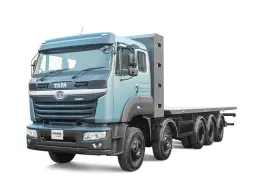
Tata Prima 35.K Auto Shift
Price to be announced
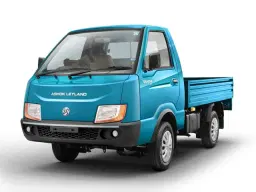
Ashok Leyland Saathi
₹6.50 Lakh Onwards

Mahindra Bolero PIK UP FB 1.3T - PS AC
₹10.48 Lakh Onwards

Omega Seiki M1ka
₹15.00 Lakh Onwards
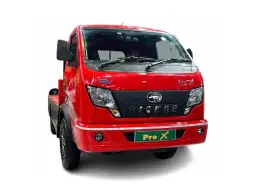
Eicher Pro x
₹17.49 Lakh Onwards

Swaraj Mazda Samrat GS Tipper Chassis
₹21.24 Lakh Onwards
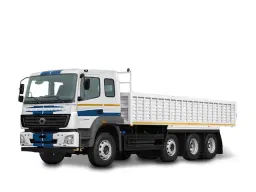
Bharat Benz 3123R
₹40.97 Lakh Onwards
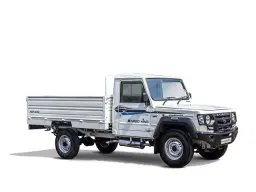
Force Kargo King
₹6.49 Lakh Onwards
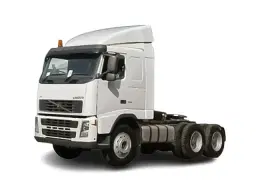
Volvo FM 440 6x4
₹70.00 Lakh Onwards