
Best Trucks for Agricultural Produce Transportation: 3 Picks
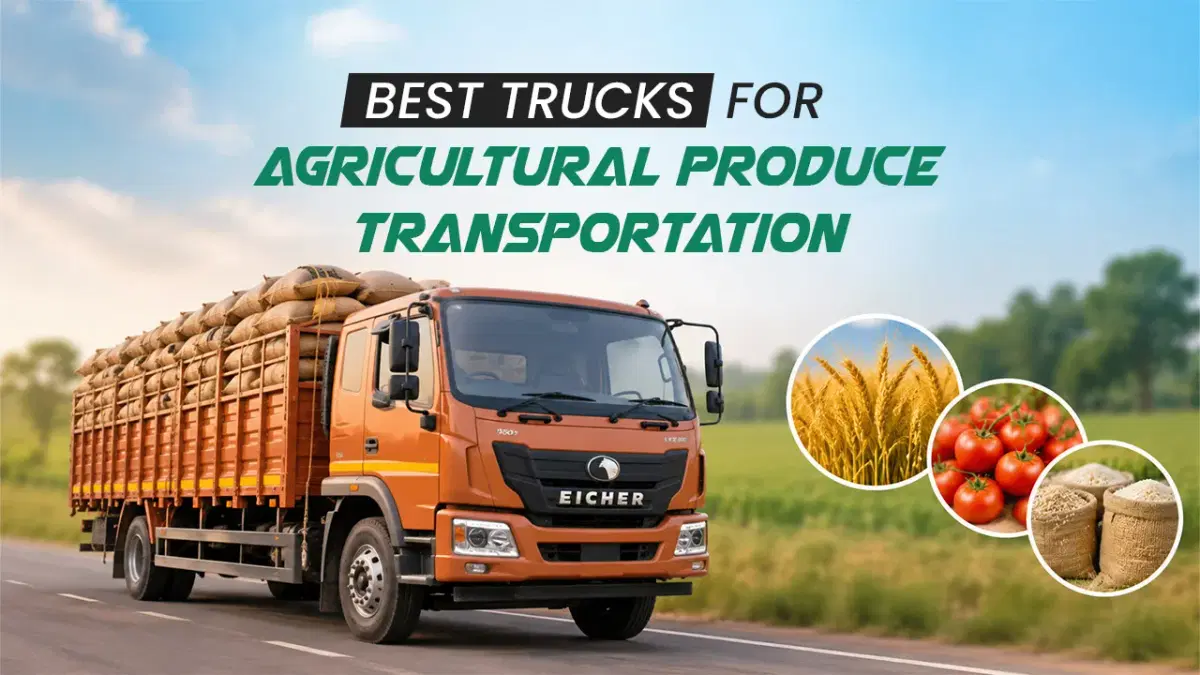
The best trucks for agricultural produce transportation in India now start at ₹7.57 lakh ex-showroom for the Tata Intra V30, and the post-GST price cuts make this the cheapest time in years to replace an ageing farm pickup. A trader loses money on every overloaded, overheated or delayed trip, so the right payload, the right deck and a sensible EMI matter more than brochure power figures. This guide compares the three pickups that dominate mandi runs in November 2026.
Best Trucks for Agricultural Produce Transportation: What Matters Before You Buy
Produce haulage is a different job from carrying cartons. Onions and potatoes are dense and punish the rear leaf springs, while tomatoes, brinjal and leafy greens are bulky and fragile, so body length and ventilation matter as much as the payload number. Farm routes also mix highway, state road and kutcha track in a single trip, usually at 3 am to beat the auction. That combination favours low-rpm torque, a strong clutch and a four-tyre pickup with a GVW between 2.5 and 3.5 tonnes, which is also the segment where finance is easiest to get.
Tata Intra V30: The Mandi-Run Workhorse
The Tata Intra V30 is the cheapest of the three at ₹7.57 lakh ex-showroom Delhi, and the on-road price in Delhi or Mumbai will be approximately ₹8.3 lakh after RTO and insurance. It uses a 1,496 cc four-cylinder diesel making 70 PS and 140 Nm, paired with a 5-speed gearbox, a 35-litre tank and a 1,300 kg payload on a 2,565 kg GVW. Tata quotes 14–17 kmpl, but a loaded truck on Indian roads will more realistically return 12–14 kmpl. At 3,000 km a month and 14 kmpl, that is roughly 214 litres of diesel, or about ₹20,350 at ₹95 a litre. Sellers moving only 700–800 kg of vegetables can look at the Tata Ace range Drivio has covered, but anyone running a tonne or more from mandi to city will find the Intra V30 the safer fit.
Ashok Leyland Bada Dost i4: Built for Volume
If your loads are bulky rather than heavy, the Ashok Leyland Bada Dost i4 is the roomiest option here. Its 1,478 cc turbocharged three-cylinder diesel makes 80 PS at 3,300 rpm and 190 Nm between 1,600 and 2,400 rpm, and the load body runs to about 9.8 feet. Payload is roughly 1,860 kg on a 3,490 kg GVW, nearly 560 kg more than the Intra V30. Prices start from about ₹8.8 lakh ex-showroom, with an on-road figure near ₹9.7 lakh in Delhi, though variants and cities differ. Expect 12–14 kmpl in loaded use, a little thirstier than the Tata, but the extra capacity cuts the cost per quintal on longer runs. This is the pickup for traders in Nashik, Kolar or Azadpur who fill the body on every trip.
Mahindra Bolero Pik-Up: For Bad Roads
The Mahindra Bolero Pik-Up costs more, from about ₹9.05 lakh ex-showroom for the 1.3-tonne variant, with the 4WD version at ₹9.35 lakh, so the on-road price in Delhi or Mumbai lands close to ₹9.9 lakh. In return you get a 2.5-litre turbo-diesel with 80 PS and 220 Nm, and a ladder-frame build that tolerates flooded fields, broken village lanes and hill roads. The 4WD variant suits apple growers in Himachal or banana farmers in Jalgaon whose pickup point is a farm gate, not a tarred yard. Heavier 1.7-tonne versions exist, and Mahindra’s rural service network is among the widest, which matters when a breakdown mid-harvest costs a full day’s earnings. Against the Bada Dost, the Bolero carries less but survives worse roads.
Which Truck Fits Which Produce
Match the truck to the crop, not the other way round. For onions, potatoes and grain bags, payload is the limiting factor, so the Bada Dost’s 1.86 tonnes earns its higher price. For tomatoes, capsicum and leafy vegetables, body length and ventilation matter more, and a longer deck with crate stacking and a tarpaulin cover protects the load better than squeezing in extra weight. For fruit and other perishables over longer distances, look at a reefer or insulated body on a pickup chassis, and confirm with the body builder that the added kerb weight still leaves usable payload. Loads that regularly cross 2 tonnes should move up to an intermediate commercial vehicle, since running a pickup above its rated GVW invites challans, tyre blowouts and early clutch wear.
What It Costs to Own One
At the usual structure of 20% down, 60 months and 11% interest, the Intra V30 works out to an EMI of about ₹13,200 a month, while the Bada Dost i4 and Bolero Pik-Up land closer to ₹15,300 and ₹15,700. Add roughly ₹20,000 a month of diesel for 3,000 km, plus driver, tyres and insurance, and it becomes clear why payload per trip decides profit. Carrying 500 kg more on every run lowers your cost per quintal without raising the fuel bill by much. Treat the on-road price as the real number to finance, since RTO, insurance and body-building charges can add close to a tenth on top of the ex-showroom figure.
Verdict: Which Truck Should You Buy
Pick the Tata Intra V30 if your runs are under 150 km and loads sit near a tonne, because it has the lowest price, the lowest EMI and a diesel bill that suits daily mandi work. Choose the Bada Dost i4 when volume decides your margin, and the Bolero Pik-Up when the road to the farm is the problem. Among the best trucks for agricultural produce transportation, none is a wrong choice, but only one matches your route and crop. For most mandi traders the sensible starting point is the Tata Intra V30, and the quickest way to confirm that is to check the on-road price and EMI for the Intra V30 in your city on Drivio.





Popular Trucks
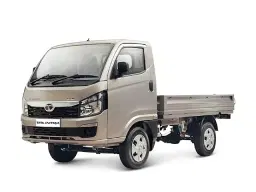
Tata Intra v10
₹7.28 Lakh Onwards
Tata Prima 35.K Auto Shift
Price to be announced
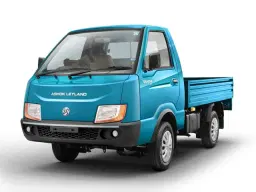
Ashok Leyland Saathi
₹6.50 Lakh Onwards
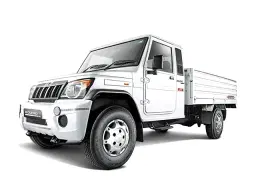
Mahindra Bolero PIK UP FB 1.3T - PS AC
₹10.48 Lakh Onwards
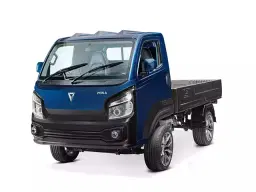
Omega Seiki M1ka
₹15.00 Lakh Onwards
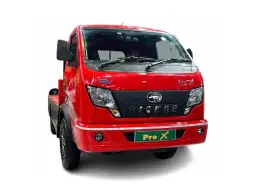
Eicher Pro x
₹17.49 Lakh Onwards
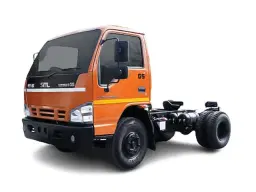
Swaraj Mazda Samrat GS Tipper Chassis
₹21.24 Lakh Onwards
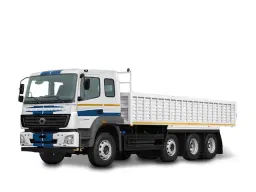
Bharat Benz 3123R
₹40.97 Lakh Onwards
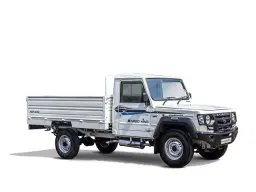
Force Kargo King
₹6.49 Lakh Onwards
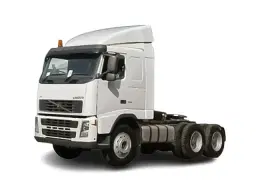
Volvo FM 440 6x4
₹70.00 Lakh Onwards