
Best Trucks for Courier & Parcel Delivery: 4 Picks, ₹3.99 Lakh+

The best trucks for courier and parcel delivery in India now start at just ₹3.99 lakh ex-showroom, with the Tata Ace Pro leading a segment that has become the backbone of e-commerce and hyperlocal logistics. For a courier franchise owner in October 2026, the choice is less about brand loyalty and more about arithmetic: payload per trip, rupees per kilometre, and how quickly delivery runs cover the loan EMI. Four mini trucks from Tata, Maruti Suzuki, Ashok Leyland and Mahindra cover almost every parcel route, from narrow Delhi lanes to hub shuttles on the national highways.
What Makes the Best Trucks for Courier and Parcel Delivery
Parcel loads are bulky rather than heavy. A typical courier run carries 300–600 kg of cartons across 80 to 120 drops, so deck length, loading height and turning radius matter as much as torque. Payload headroom still counts, because a mini truck loaded to its limit every day wears out clutches and leaf springs early. Fuel is the other big variable: with diesel at about ₹95 per litre, even 2 kmpl of difference changes your monthly margin. Add a dealer network that can get you back on the road within a day, and you have the real checklist.
Tata Ace Pro: The Budget Pick for Doorstep Routes
Launched in mid-2025, the Tata Ace Pro is India’s most affordable four-wheeled mini truck, priced from ₹3.99 lakh ex-showroom for the petrol. It uses a 694 cc engine, carries 750 kg and has a 1,460 kg GVW. Its compact footprint suits congested markets in Delhi, Mumbai and Kolkata. The petrol-CNG bi-fuel version costs ₹4.99 lakh and is rated at 32.44 km/kg by ARAI. In loaded city use, expect a lower figure, likely in the low-to-mid 20s.
On-road price in Delhi will be approximately ₹4.5 lakh for the petrol. An EMI at 20 percent down over 60 months at 11 percent works out to roughly ₹6,900 a month. The electric Ace Pro, from about ₹6.50 lakh, makes sense only if you run fixed routes under 100 km a day with reliable overnight charging. Our Tata Ace EV vs Ace Gold Diesel comparison breaks down that electric-versus-diesel maths in detail.
Maruti Suzuki Super Carry: The Stronger Engine
If your route includes flyovers or 60 km hub shuttles on a loaded deck, the Maruti Suzuki Super Carry deserves a test drive. Its 1,197 cc petrol engine is far larger than the Ace Pro’s. It pulls loads with 104 Nm of torque and carries 740 kg on a 1,600 kg GVW. Ex-showroom Delhi pricing starts around ₹4.88 lakh for the petrol, with the CNG version near ₹6 lakh.
That makes it roughly ₹90,000 costlier than the Ace Pro, and the EMI rises to about ₹8,500 a month on the same terms. Maruti’s service reach in small towns and typically strong resale value are the real arguments in its favour, particularly for owners who plan to sell after three or four years.
Ashok Leyland Dost+: Built for Bulk Parcels
When parcels are heavy appliances, bagged goods or middle-mile hub transfers, the Ashok Leyland Dost+ moves into a different league. Its 1,478 cc diesel makes 80 hp and 190 Nm. Payload is 1,500 kg on a 2,805 kg GVW, so it carries twice what the Ace Pro does. Ex-showroom Delhi pricing is around ₹7.24 lakh, which translates to an EMI near ₹12,600 on the standard terms.
ARAI rates it at 19.6 kmpl, though loaded real-world figures of 14 to 16 kmpl are likelier. At 100 km a day for 26 days and 15 kmpl, you burn about 173 litres, or roughly ₹16,500 a month in diesel. That is the cost of capacity: the Dost+ earns more per trip, but a half-empty deck wastes it. Festive peaks around Diwali tempt every owner to overload, but staying within rated payload protects warranty cover and avoids RTO challans.
Mahindra Supro Excel: Longer Deck for Awkward Cartons
Parcel owners who carry long or oddly shaped cartons will like the Mahindra Supro Profit Truck Excel, which has a 2,515 mm cargo deck. The diesel version is rated for 900 kg and the CNG Duo for 750 kg, with a claimed CNG range of 500 km on three cylinders. Delhi ex-showroom pricing began at about ₹6.61 lakh for the diesel and ₹6.96 lakh for the CNG Duo. Dealers may quote revised figures after the GST 2.0 changes, so confirm before booking.
Against the Super Carry, it gives up price but offers more payload and deck space. That matters when furniture boxes and large cartons make up a big share of your parcels.
Petrol, CNG, Diesel or Electric: What Suits Parcel Runs
Fuel choice shapes your earnings as much as the truck. Petrol mini trucks like the Ace Pro and Super Carry cost least to buy and are easy to drive in stop-start traffic, but they cost more per kilometre. CNG variants carry a premium of about ₹1 lakh over petrol. They noticeably cut running costs in cities with dense CNG pumps such as Delhi NCR, Mumbai and Pune, though refuelling queues can eat into the delivery day. Diesel suits the heavier Dost+ and Supro, which need low-end torque with a full deck. Electric trucks win on running cost for fixed hub-and-spoke routes, but only if you can charge overnight and your daily distance sits well inside the claimed range.
Our Verdict for Courier Owners
For most owner-operators starting out, the Ace Pro is the sensible first truck: lowest price, lowest EMI and a body that fits Indian lanes. Move up to the Dost+ only if your parcels are consistently heavy, since an empty deck on a ₹7.24 lakh truck earns nothing extra. The best trucks for courier and parcel delivery are the ones whose payload you fill on most trips, so match the deck to your daily volume before comparing prices. Whichever you shortlist, check the on-road price and EMI for the Tata Ace Pro in your city on Drivio before you visit a dealer.





Popular Trucks
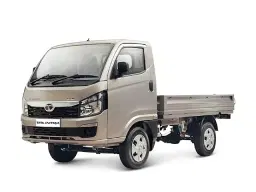
Tata Intra v10
₹7.28 Lakh Onwards
Tata Prima 35.K Auto Shift
Price to be announced
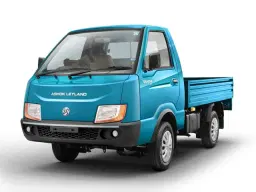
Ashok Leyland Saathi
₹6.50 Lakh Onwards
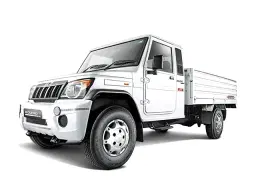
Mahindra Bolero PIK UP FB 1.3T - PS AC
₹10.48 Lakh Onwards
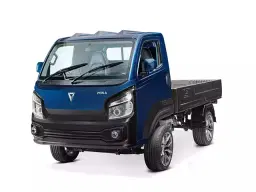
Omega Seiki M1ka
₹15.00 Lakh Onwards
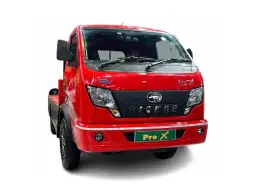
Eicher Pro x
₹17.49 Lakh Onwards
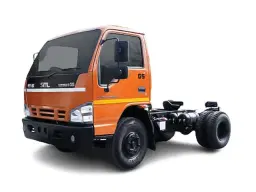
Swaraj Mazda Samrat GS Tipper Chassis
₹21.24 Lakh Onwards
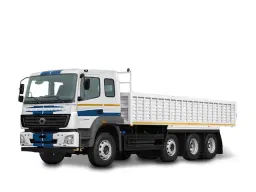
Bharat Benz 3123R
₹40.97 Lakh Onwards
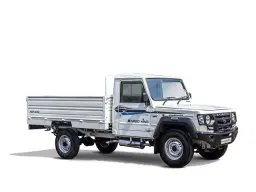
Force Kargo King
₹6.49 Lakh Onwards
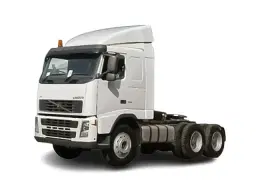
Volvo FM 440 6x4
₹70.00 Lakh Onwards