
Best Truck Finance Providers in India: Banks, NBFCs & Digital Platforms Compared
Finding the best truck finance providers in India starts with one number that most first-time buyers overlook: lenders typically fund 75%–90% of the vehicle's on-road price, not the ex-showroom price, and that gap decides your real down payment. The remaining 10%–25% has to come from your own pocket or margin money, and how comfortably you can arrange that, alongside the EMI that follows, depends heavily on which lender category you choose. In India's commercial vehicle market, where route income, diesel cost, and load availability already squeeze monthly cash flow, the right finance partner can mean the difference between an EMI that fits your business and one that strains it every single month.
Why the Choice Matters Now
Every transport operator — whether running a single Tata Ace on local mandi routes or managing a fleet on highway freight contracts — eventually faces the same decision: which lender offers the right balance of approval speed, truck finance interest rate, documentation ease, and repayment flexibility. Public sector banks, private banks, NBFCs, captive finance arms, and digital commercial vehicle finance platforms all operate differently in India, and none of them suits every buyer equally. A first-time buyer with limited credit history will face a different approval path than an existing fleet owner with five years of repayment track record, which is exactly why comparing provider types matters before signing any loan agreement.
How Truck Finance Interest Rates Actually Work
There is no single, fixed truck finance interest rate in India. Rates usually vary based on your CIBIL score, vehicle category, business vintage, route income stability, income proof, and whether you're financing a new or used vehicle. Lenders treat new truck loan and used truck loan applications differently — used vehicles typically carry shorter tenure and slightly tighter loan-to-value ratios because vehicle valuation and remaining service life come into play. Loan tenure for commercial vehicles generally runs 3–7 years, depending on the lender's policy and the borrower's profile, and a longer tenure usually means a lower EMI but a higher total repayment cost over the loan's life.
Banks, NBFCs, Captive Finance, and Digital Platforms Compared
Each category of commercial vehicle loan providers brings a different trade-off to the table, and understanding this before applying saves both time and rejection risk.
Public sector banks may offer steadier rates, but slower verification doesn't always suit an operator who needs a truck on the road within weeks. NBFCs are often more flexible with operators lacking perfectly documented income, though that flexibility can come at a comparatively higher rate. Captive finance arms tend to work well for buyers staying loyal to a specific manufacturer, since approval often moves faster within an existing dealer-lender relationship. Digital platforms like Drivio Trucks let buyers compare options without visiting several branches — useful for first-time buyers unsure which lender category fits.
New Truck Finance vs Used Truck Finance
A truck loan in India for a new vehicle generally moves faster because valuation is straightforward and the vehicle quotation comes directly from the dealer. Used truck finance, by contrast, requires the lender to assess the vehicle's age, condition, remaining permit validity, and resale value, which can extend processing time and sometimes reduce the loan-to-value ratio. Buyers researching specific models — such as the Tata Intra V50 finance guide or the Ashok Leyland Dost loan and EMI guide — will notice that financing terms can differ meaningfully even between two trucks in a similar price bracket, simply because of how each lender treats that particular vehicle category.
Documents, Down Payment, and Hidden Costs That Affect Your EMI
Most lenders ask for a similar core document set: Aadhaar card, PAN card, recent bank statements, income or business proof, address proof, a vehicle quotation, and an existing loan repayment track record where applicable. Beyond the down payment, buyers should account for processing fees, foreclosure charges, and hypothecation charges tied to the vehicle's registration. On-road price matters more than ex-showroom price here: registration, insurance, body-building costs, permits, road tax, and state-specific levies all add to the final figure behind your truck loan EMI. For owner-drivers handling FMCG distribution, construction logistics, or e-commerce delivery routes, a miscalculation here can throw off monthly cash flow for the entire repayment tenure.
Margin Money and Repayment Track Record
Margin money — the portion of the on-road price you pay upfront — typically ranges depending on lender policy, vehicle type, and your credit profile, and a stronger repayment track record on any previous vehicle loan can improve both your approval odds and the terms offered. Guarantor requirements are also common for first-time buyers or those financing higher-value commercial vehicles, particularly when the applicant's income proof alone doesn't fully satisfy the lender's risk assessment.
Which Provider Type Fits Your Buyer Profile
A first-time truck buyer with limited credit history will typically find NBFCs or digital platforms more accommodating, since these lenders are generally more comfortable working with thinner documentation. An existing fleet owner with an established repayment record is often better positioned to negotiate with banks for a more competitive rate. Used truck buyers should expect more scrutiny around vehicle valuation regardless of lender type, so working with a platform that can quickly compare offers across multiple commercial vehicle loan providers saves real time. Small city or local transport operators running short routes for mandi or local goods movement tend to benefit from NBFC flexibility, while highway freight operators with longer, more predictable route income may find banks or captive finance schemes better suited to their scale.
There is no single lender that qualifies as the best truck finance providers in India for every buyer — the right choice depends on your credit profile, vehicle type, business vintage, and how quickly you need the truck on the road, as of June 2026. What stays consistent across every buyer category is the need to compare interest rate, documentation, down payment, and tenure before committing to any one lender, since final approval always depends on the lender's own verification, document checks, and assessment of your repayment capacity. Check the on-road price and EMI for your next truck in your city on Drivio.

Popular Trucks
Tata Intra v10
₹7.28 Lakh Onwards
Tata Prima 35.K Auto Shift
Price to be announced
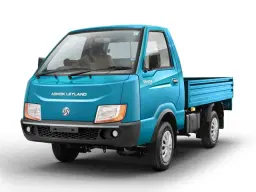
Ashok Leyland Saathi
₹6.50 Lakh Onwards

Mahindra Bolero PIK UP FB 1.3T - PS AC
₹10.48 Lakh Onwards
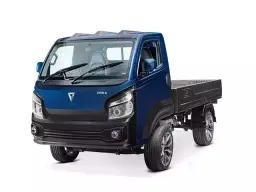
Omega Seiki M1ka
₹15.00 Lakh Onwards
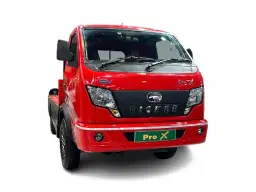
Eicher Pro x
₹17.49 Lakh Onwards
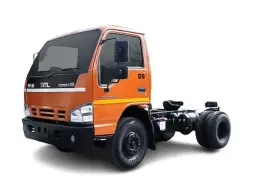
Swaraj Mazda Samrat GS Tipper Chassis
₹21.24 Lakh Onwards
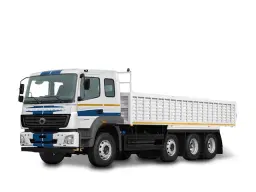
Bharat Benz 3123R
₹40.97 Lakh Onwards
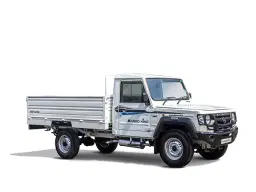
Force Kargo King
₹6.49 Lakh Onwards
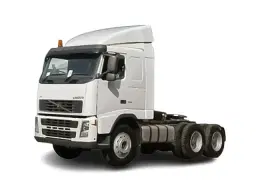
Volvo FM 440 6x4
₹70.00 Lakh Onwards