
New vs Used Trucks: Which One Should You Buy in 2026?

New vs Used Trucks: Which One Should You Buy in 2026?
Choosing between new vs used trucks can make or break the profitability of a transport business in India — and in June 2026, this decision carries more financial weight than ever before. A new Tata Intra V50 retails at around ₹10–11 lakh on-road, while a three-year-old equivalent fetches ₹5.5–6.5 lakh on the used market. That ₹4–5 lakh difference can mean the difference between a comfortable EMI and a loan that pinches every month when freight rates dip.
Across India's vast transport ecosystem — from last-mile delivery startups to established interstate fleet operators — the new-versus-used question is ultimately a business finance question, not just a preference.
The Real Cost Gap Between New and Used
Entry-level new trucks in India start at roughly ₹6–8 lakh for small commercial vehicles like the Tata Ace Gold and Mahindra Jeeto. Mid-range workhorses such as the Ashok Leyland Bada Dost and Eicher Pro 2049 sit in the ₹10–14 lakh band, while BharatBenz medium-duty trucks and Tata LPT variants can cross ₹20–35 lakh depending on configuration.
For a first-time buyer financing the purchase, these prices require a 15–20% down payment, meaning ₹1.5–5 lakh upfront before the truck moves an inch.
Used equivalents compress that entry barrier sharply. A 2021–2022 Tata Ace Gold in good working condition trades at ₹3.5–4.5 lakh, while a used Ashok Leyland Bada Dost from the same period is available in major transport hubs for ₹6–8 lakh.
Buyers looking at light-duty inter-city trucks can find well-maintained Eicher Pro Series vehicles for ₹9–13 lakh — trucks that would have cost nearly double when new. On paper, the savings look compelling, but total cost of ownership tells a more complete story.
Financing and EMI: Where New Trucks Have a Clear Edge
New commercial vehicle finance in India has become significantly more accessible. Banks and NBFCs routinely offer 80–90% loan-to-value (LTV) on new trucks from established manufacturers, with repayment tenures stretching to 5–7 years.
Interest rates for new truck loans currently range from 9.5% to 12% per annum depending on the buyer's credit profile and lender. First-time buyers with clean CIBIL scores are finding approval processes faster than at any point in the last decade.
Used truck financing is a different story. Most lenders cap LTV at 60–70% for vehicles more than three years old, requiring buyers to contribute more cash upfront. Interest rates are typically 2–4% higher than new vehicle rates because the collateral carries age-related risk.
Many NBFCs will not finance trucks older than 7–8 years. This creates a paradox: used trucks are cheaper to buy, but often more expensive to finance relative to their value.
A practical comparison illustrates the difference. A new Tata Intra V50 at ₹11 lakh with 85% LTV, 5-year tenure, and 10.5% interest results in an EMI of approximately ₹19,500 per month. A comparable used truck at ₹7 lakh with 65% LTV, 3-year tenure, and 13.5% interest produces an EMI of around ₹16,000 per month — only slightly lower despite the much older asset.
New vs Used Trucks at a Glance
| Factor | New Truck | Used Truck |
|---|---|---|
| Purchase Price | ₹8–40 lakh+ | ₹3–18 lakh |
| EMI Burden | Higher (longer tenure, larger principal) | Lower monthly outgo |
| Fuel Efficiency | BS6 Phase 2 Optimised | Older norms, higher consumption |
| Warranty | 2–3 Years Manufacturer Warranty | None (As-Is Condition) |
| Maintenance Cost | Minimal for First 2–3 Years | Ongoing and Unpredictable |
| Financing Ease | High – 80–90% LTV Available | Tougher – 60–70% LTV Maximum |
| Resale Value | Rapid Depreciation Initially | More Stable Value Retention |
| Downtime Risk | Very Low | Moderate to High |
Maintenance, Warranty, and the Cost of Downtime
A new truck comes with a manufacturer warranty covering the first 2–3 years or a predefined kilometre threshold. For operators covering 8,000–12,000 km per month, this provides meaningful financial protection during the most intensive ownership period.
Authorised service centres for Tata Motors, Ashok Leyland, and BharatBenz are now widely available across tier-2 and tier-3 cities, reducing turnaround time and keeping trucks on the road.
Used trucks arrive without this safety net. A breakdown on an intercity route does not only generate repair expenses — it also causes revenue loss, delivery penalties, and driver idle time.
For operators running a single vehicle, even one week of downtime per month can eliminate 20–25% of monthly earnings. As trucks age, recurring issues involving fuel systems, clutches, suspension components, and electrical systems become increasingly common.
Fuel Efficiency and Running Costs: The Long Multiplication Problem
India's transition to BS6 Phase 2 emissions standards has improved fuel economy across many new commercial vehicles. A new Ashok Leyland Bada Dost BS6 Phase 2 typically achieves 16–18 kmpl under standard loading conditions.
Comparable trucks operating on older BS4 or early BS6 calibrations generally return 12–15 kmpl under similar circumstances.
At current diesel prices of approximately ₹91–94 per litre in June 2026, a difference of just 3 kmpl can create a cost gap of ₹6–7 per kilometre. A truck covering 8,000 km per month may therefore consume ₹48,000–56,000 more fuel annually than a newer equivalent.
For fleet operators running multiple vehicles, these fuel savings can offset a substantial portion of the acquisition premium attached to a new truck.
Depreciation and Resale: The Two-Year Sweet Spot
New trucks depreciate fastest during the first two years. A ₹10 lakh light commercial vehicle typically loses 25–30% of its value by year two, reducing its market value to approximately ₹7–7.5 lakh.
Used trucks in the 3–5 year age bracket tend to experience slower depreciation and more predictable resale values. This makes them attractive to operators seeking flexibility or maintaining backup fleet capacity.
However, operators intending to keep vehicles for seven years or longer often benefit from buying new, as the higher upfront cost is spread across a much longer ownership period.
When a New Truck Makes More Sense
Operators with long-term fleet plans and high monthly running should strongly consider new trucks. Businesses handling e-commerce contracts, dedicated intercity freight routes, and corporate logistics assignments benefit directly from warranty protection, improved fuel efficiency, and predictable maintenance costs.
Where downtime results in contractual penalties, the reliability advantage of a new truck becomes commercially critical.
When a Used Truck Is the Smarter Entry
Budget-conscious operators entering the transport sector for the first time often achieve better capital efficiency with a carefully selected used truck.
A ₹6 lakh used truck requiring ₹1.8 lakh down payment versus a ₹10 lakh new truck requiring ₹2 lakh down payment leaves additional working capital available for fuel, salaries, permits, and business development.
Businesses running 3,000–5,000 km per month generally see less dramatic fuel-cost differences, making lower acquisition cost a more influential factor in profitability.
The Verdict: Match the Truck to the Business Model
The correct answer in the new-versus-used truck debate depends entirely on how the business operates.
If you run more than 8,000 km per month, manage contracts with strict delivery requirements, or plan to retain the vehicle for 7–10 years, a new BS6 Phase 2 truck is usually the financially stronger choice.
If you are entering the market for the first time, expanding a fleet on a limited budget, operating seasonal cargo routes, or purchasing a backup vehicle, a carefully inspected 3–5-year-old truck from an established manufacturer can deliver excellent value at roughly half the cost of a new vehicle.
The key is inspection. Service history, tyre condition, accident records, and engine health matter far more than the asking price when evaluating a used commercial vehicle.
Both strategies have created successful transport businesses across India. The costly mistake is purchasing either type of truck without first calculating total ownership costs, financing expenses, fuel consumption, and expected utilisation.




Popular Trucks
Tata Intra v10
₹7.28 Lakh Onwards
Tata Prima 35.K Auto Shift
Price to be announced
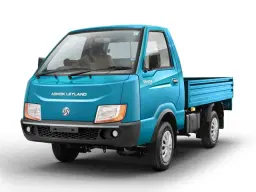
Ashok Leyland Saathi
₹6.50 Lakh Onwards
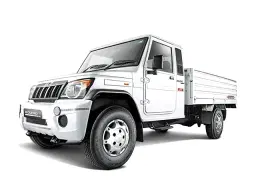
Mahindra Bolero PIK UP FB 1.3T - PS AC
₹10.48 Lakh Onwards
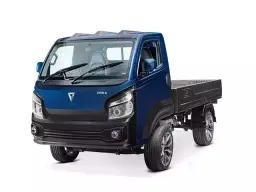
Omega Seiki M1ka
₹15.00 Lakh Onwards
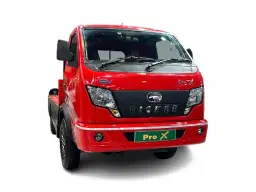
Eicher Pro x
₹17.49 Lakh Onwards
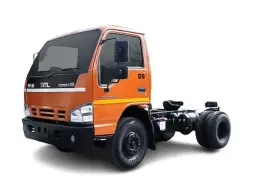
Swaraj Mazda Samrat GS Tipper Chassis
₹21.24 Lakh Onwards
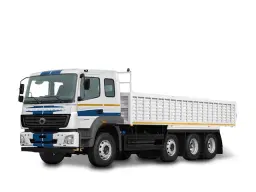
Bharat Benz 3123R
₹40.97 Lakh Onwards
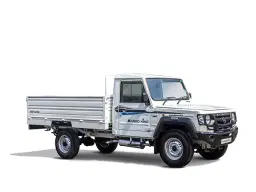
Force Kargo King
₹6.49 Lakh Onwards
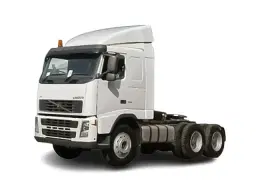
Volvo FM 440 6x4
₹70.00 Lakh Onwards