
How Much Does a JCB Earn Per Day? Real Numbers Behind India's Most-Bought Construction Machine
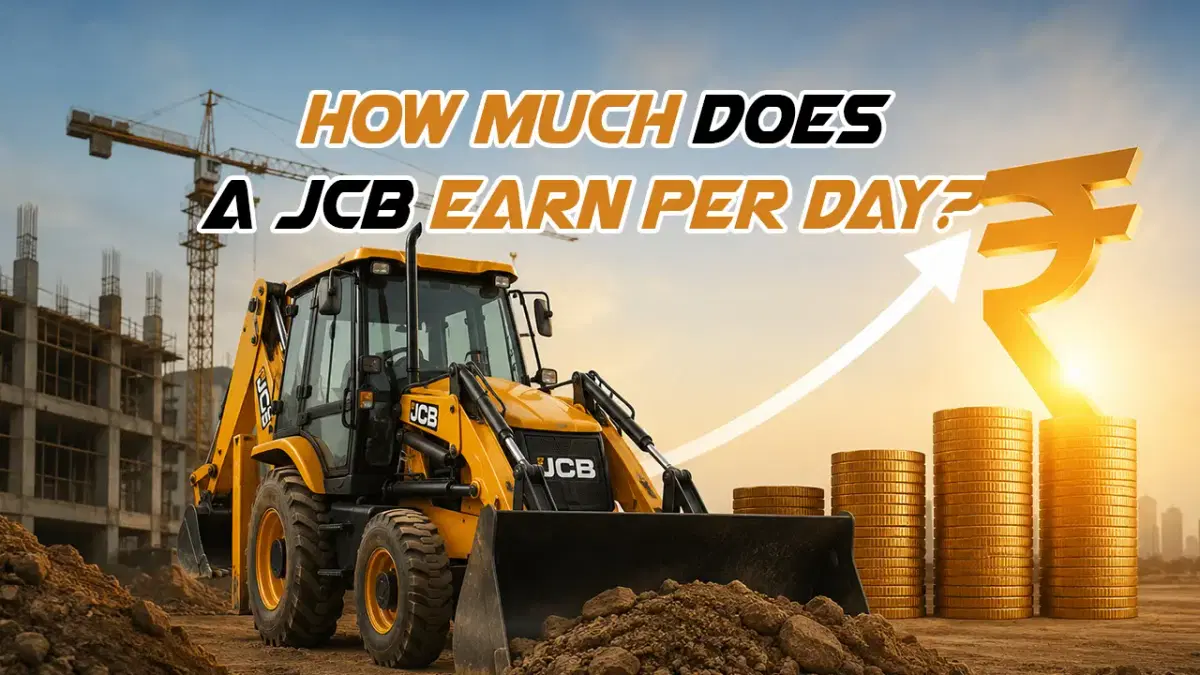
How much does a JCB earn per day is the first question every contractor, small business owner, or first-time equipment buyer asks before signing a loan agreement, and the honest answer sits between ₹2,500 and ₹8,000 daily for most operators across India, with premium infrastructure and government contract work pushing that figure considerably higher. Earnings swing widely depending on your city, the specific model you're running, whether you employ a hired operator or drive it yourself, diesel prices, and how many billable hours you actually manage to fill in a working month. A JCB sitting idle earns nothing, and that single fact separates profitable owners from disappointed ones. Before committing lakhs of rupees to a backhoe loader purchase or finance agreement, understanding what the machine genuinely brings home — after fuel, EMI, and maintenance are deducted — matters far more than the glossy brochure figures dealers quote.
How Much Does a JCB Earn Per Day in India?
The daily earning picture changes sharply depending on location. In small towns and semi-rural markets, a backhoe loader typically earns ₹2,500 to ₹4,000 per day, largely from farm-pond digging, drainage work, and local municipal jobs where competition among machine owners is high and rates stay compressed. Tier-2 cities like Indore, Nagpur, or Coimbatore see daily earnings climb to ₹4,000–₹6,500, driven by steadier private construction demand and better site access. Metro cities — Mumbai, Bengaluru, Delhi NCR — regularly push earnings to ₹6,000–₹8,500 per day, since urban infrastructure work, basement excavation, and utility trenching command premium rates. Machines working on government infrastructure or NHAI road contracts often earn the most, sometimes touching ₹9,000–₹10,000 per day, but these contracts usually involve longer payment cycles and require the owner to meet strict compliance and documentation standards. As of July 2026, contractors across most states report steady demand, though earnings remain uneven month to month depending on how many projects are actively running in your operating radius.
JCB Rental Charges Per Hour
Most owners and rental operators price their machines by the hour rather than the day, and JCB hourly rental charges in India typically range from ₹700 to ₹1,200 per hour, depending on whether the operator is included. A bare machine without an operator rents cheaper but shifts liability and skill risk onto the client, so most owners prefer to quote operator-inclusive rates. Diesel prices, which currently hover around ₹95 per litre in most states, factor directly into these rates since a working JCB consumes roughly 4–5 litres per hour under load. Transportation charges to move the machine between sites add further cost, often billed separately at ₹1,500–₹3,000 depending on distance. Minimum booking hours — usually four to six hours per booking — protect owners from short, unprofitable jobs, while night shift work on urban projects commands a 15–20% premium due to lighting requirements and operator overtime.
Monthly Income Potential and Real Operating Costs
Scaling daily figures into a monthly picture gives a clearer sense of what JCB business profit actually looks like. A machine working roughly 20–24 billable days a month at an average of ₹5,500 per day generates gross monthly revenue of approximately ₹1.1–1.3 lakh. Against this, diesel expenses alone can run ₹35,000–₹45,000 monthly for consistent two-shift usage, operator salary typically adds another ₹18,000–₹25,000 if you're not driving the machine yourself, and routine maintenance, filters, and hydraulic servicing account for roughly ₹8,000–₹12,000. If the machine is financed, EMI obligations at standard terms — 20% down payment, 60-month tenure, around 11% interest — typically work out to ₹55,000–₹65,000 per month on a ₹35 lakh machine. Add insurance at roughly ₹3,000–₹4,000 monthly and set aside a buffer for unplanned repairs, and net monthly profit for a financed, actively working JCB usually lands between ₹15,000 and ₹35,000, tightening considerably in months with lower utilization or breakdown downtime.
JCB Purchase Cost and Financing
Understanding JCB machine price is essential before any earnings conversation makes sense. The JCB 3DX, India's most widely sold backhoe loader, carries an ex-showroom price of approximately ₹35 lakh, with on-road pricing including RTO, insurance, and registration pushing the figure closer to ₹37–38 lakh. The JCB 3DX Xtra with its larger 1 cum bucket and CRDI engine is priced around ₹32 lakh ex-showroom. The JCB 4DX, the range-topping four-wheel-drive model built for hilly terrain and heavier digging, runs ₹36–40 lakh ex-showroom. Typical down payments sit at 20% of the on-road price, with financiers offering tenures up to 60 months at roughly 11% interest, translating to EMIs in the ₹60,000–₹75,000 range depending on the model and loan structure. Buyers exploring JCB loan eligibility should factor in that lenders typically require proof of prior construction contracts or land ownership to approve financing on favourable terms.
Factors That Affect Earnings
Location remains the single biggest variable, but it's far from the only one. Project availability in your operating radius determines how many billable days you can realistically fill each month, and machine age directly affects both fuel efficiency and reliability — a five-year-old JCB burns noticeably more diesel and spends more days in the workshop than a newer one. Operator skill influences both job completion speed and client repeat business, since a skilled operator finishes trenching or excavation work faster, effectively increasing billable throughput. Seasonal construction demand also plays a major role, with monsoon months typically slowing outdoor excavation work in most states while picking up sharply post-monsoon and during the pre-election infrastructure push that many state governments favour. Government infrastructure spending, particularly on rural roads and urban metro projects, has kept demand relatively resilient through 2026, though maintenance downtime — often underestimated by first-time buyers — can quietly erode 10–15% of a machine's potential working days annually.
Is Buying a JCB Profitable?
For an owner who actively manages utilization, buying a JCB is generally worthwhile, though it is not the passive income source it's sometimes portrayed as. Break-even on a financed machine typically takes 18–30 months depending on utilization rates and local rental competition, and genuine ROI only materializes once the loan is substantially paid down and maintenance costs stabilize. The main risks are downtime from breakdowns, seasonal demand gaps, and payment delays on government contracts, which can strain monthly cash flow even when the underlying work is profitable on paper. Owners who already have contractor relationships, live in high-demand tier-2 or metro markets, or plan to operate the machine themselves rather than hiring an operator tend to see the strongest returns. Those buying purely speculatively, without prior contacts in the construction trade or a clear pipeline of work, should be cautious, since an idle JCB with an EMI attached becomes a liability rather than an asset within a few unproductive months.
JCB vs Tata Hitachi vs CASE vs CAT
JCB continues to hold the earnings and resale edge in the Indian market largely due to sheer parts availability and brand recognition among contractors, who often prefer hiring a JCB simply because it's the name they trust. Tata Hitachi offers a genuinely competitive alternative at a slightly lower entry cost, worth comparing directly against the JCB 4DX for buyers weighing operating costs closely. CAT machines tend to command premium rental rates in industrial and metro markets but carry a higher purchase price that extends the break-even timeline.
Buying a JCB in India today remains financially worthwhile for owners who can guarantee steady utilization and operate in markets with genuine construction demand, but it is not a guaranteed income machine for passive investors chasing the headline daily-earning figures. The gap between a profitable JCB and a loss-making one almost always comes down to utilization discipline, realistic financing terms, and proximity to active project pipelines rather than the machine itself. Check the latest JCB on-road price, finance options, and EMI for your city on Drivio Trucks before making your investment decision.

Popular Trucks
Tata Intra v10
₹7.28 Lakh Onwards
Tata Prima 35.K Auto Shift
Price to be announced
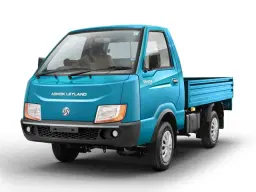
Ashok Leyland Saathi
₹6.50 Lakh Onwards
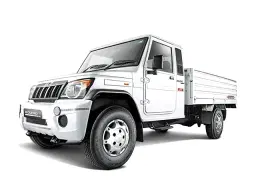
Mahindra Bolero PIK UP FB 1.3T - PS AC
₹10.48 Lakh Onwards
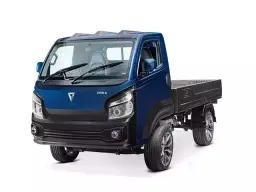
Omega Seiki M1ka
₹15.00 Lakh Onwards
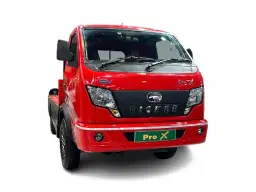
Eicher Pro x
₹17.49 Lakh Onwards
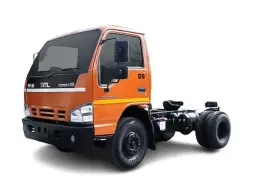
Swaraj Mazda Samrat GS Tipper Chassis
₹21.24 Lakh Onwards
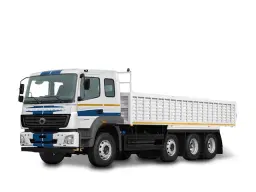
Bharat Benz 3123R
₹40.97 Lakh Onwards
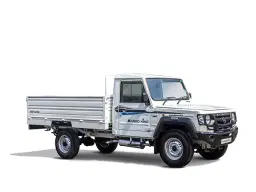
Force Kargo King
₹6.49 Lakh Onwards
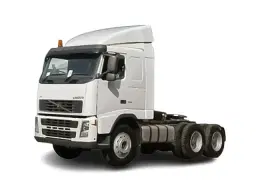
Volvo FM 440 6x4
₹70.00 Lakh Onwards