
Best Trucks for Cement Transport in India: 5 Picks for 2026

The best trucks for cement transport in India this November 2026 start with the Mahindra Furio 12, priced from ₹21.94 lakh ex-showroom. Its 6,468 kg payload takes roughly 129 bags of 50 kg cement, and with the post-monsoon building season at full pace, dealers and contractors are counting every trip. Sand, aggregate and rubble need a different body, so this guide sorts the picks by the job each does best.
Best Trucks for Cement Transport: Match the Body to the Load
Bagged cement needs a cargo or high-side deck body that keeps bags dry and stacked. Sand, stone chips and demolition debris need a tipper. Bulk cement travels in pressurised bulker trailers behind tractor units, which is a separate segment from the rigid trucks covered here. Pick the wrong body and a strong engine still loses money, because the truck waits at the yard or returns empty from a site it cannot enter. Most dealers and mid-size contractors in India run either an 11–13 tonne GVW rigid truck for city and district work or a 35-tonne 12-wheeler for plant-to-depot hauls, and that is where the picks below sit.
Mahindra Furio 12: the practical choice for bagged cement
The Furio 12 uses a 3.5-litre mDi Tech four-cylinder diesel rated at 138 hp and 525 Nm, with peak torque between 1,250 and 1,800 rpm, a band that suits loaded stop-start city driving. GVW is 11,990 kg, the tank holds 190 litres, and the listed mileage is about 7 kmpl; expect less on ghat roads with a full deck. Ex-showroom prices run from ₹21.94 lakh for the CBC chassis to ₹22.89 lakh for the longest high-side deck, though a few listings quote higher, so confirm the figure with your dealer. The on-road price in Delhi or Mumbai is likely to be around ₹23 lakh to ₹24 lakh.
Running cost is easy to estimate. A 400 km round trip burns about 57 litres, roughly ₹5,400 at ₹95 a litre of diesel. With 20% down and a 60-month loan at 11%, the EMI on the base price comes to about ₹38,000 a month. The closest rivals are the Tata 1412g LPT and Tata 1512 LPT, listed at roughly ₹22.7 lakh and ₹23.5 lakh, so the Furio 12 undercuts both at entry level. Compare payload on the exact body you plan to fit before deciding.
Tata Signa 3523.TK: for plant-to-depot volume
Beyond 10 tonnes the economics change. The Signa 3523.TK is a 12-wheeler with a 5.6-litre Cummins ISBe diesel making 220 hp and 850 Nm, a 35,000 kg GVW and a payload of about 26,000 kg. Listed at around ₹40.77 lakh ex-showroom, it carries roughly four times the Furio 12’s payload for under twice the price, which cuts the cost per tonne on routes of 300 to 600 km. The catch is access. A 12-wheeler struggles in narrow lanes and tight project sites, so it suits depot-to-depot runs better than doorstep delivery.
Tippers for sand, aggregate and rubble
Three tippers in the 13-tonne GVW class dominate building material transport. The Eicher Pro 2110XPT runs a 160 hp, 500 Nm E494 diesel at 13,000 kg GVW, with 32% gradeability and Eicher Live telematics for tracking trips. The BharatBenz 1217C gets a 3.9-litre 4D34i engine with 167 hp and 520 Nm, the same 13,000 kg GVW and the steepest gradeability of the group at 38.71%, which helps on quarry ramps and hill sites. The Ashok Leyland Ecomet 1215 Tipper is the lighter option at 150 hp, 450 Nm and 12,900 kg GVW, a sensible fit for flat-terrain contractors who do not need the extra pull. Pricing varies with the body builder and city, so get the on-road quote before comparing.
Do electric trucks make sense for cement routes yet?
Cement makers are testing them. UltraTech deployed 45 electric heavy-duty trucks for clinker haulage in northern India in June 2026, and Wonder Cement began running an initial 30-truck electric trailer fleet with Montra Electric from its Nimbahera plant in July 2026. Both are captive, fixed-route plant operations where charging is predictable. For a dealer serving scattered drop points across a district, diesel rigid trucks like those above remain the practical option in 2026.
What to check before you buy
Start with the body. Many chassis are sold as cowl-chassis (CBC) and the deck, high sides and tarpaulin come extra, which is why Furio 12 quotes differ by nearly ₹1 lakh across variants. Next, check the GVW against your real load, including body weight, because overloading wears out suspension and attracts penalties at weighbridges. Buyers shortlisting the best trucks for cement transport should also ask for a dealer-fitted body quote and a service centre list along their route, since a breakdown between plant and site costs a full day of trips. For small-batch deliveries under a tonne, the Tata Ace range is a lighter alternative, as covered in our Tata Ace EV vs Ace Gold Diesel comparison, and our look at how much a commercial vehicle can earn helps in working out payback before you sign the loan papers.
Which cement truck should you buy in November 2026?
For most buyers choosing among the best trucks for cement transport, the Mahindra Furio 12 is the sensible first test drive: an entry price near ₹21.94 lakh, a torque-rich engine and a payload that suits bagged cement and city access. Pick the Tata Signa 3523.TK when you run fixed depot routes and want the lowest cost per tonne. Go for the BharatBenz 1217C or Eicher Pro 2110XPT when sand and aggregate on rough ground make up most of your work. Check the on-road price and EMI for the Mahindra Furio 12 in your city on Drivio, because the quote for a CBC chassis and a high-side deck can differ by nearly ₹1 lakh.


Popular Trucks
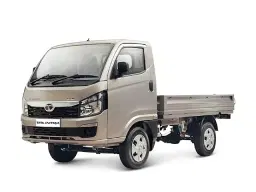
Tata Intra v10
₹7.28 Lakh Onwards
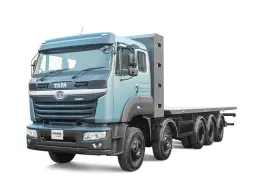
Tata Prima 35.K Auto Shift
Price to be announced
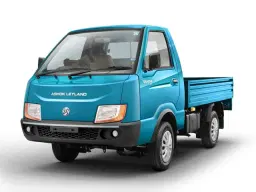
Ashok Leyland Saathi
₹6.50 Lakh Onwards
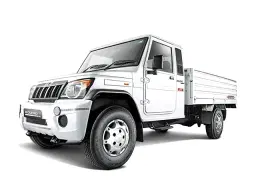
Mahindra Bolero PIK UP FB 1.3T - PS AC
₹10.48 Lakh Onwards
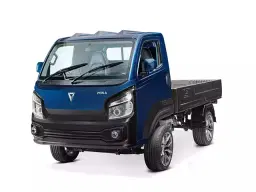
Omega Seiki M1ka
₹15.00 Lakh Onwards
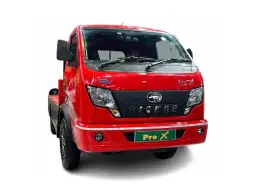
Eicher Pro x
₹17.49 Lakh Onwards
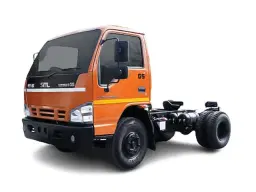
Swaraj Mazda Samrat GS Tipper Chassis
₹21.24 Lakh Onwards
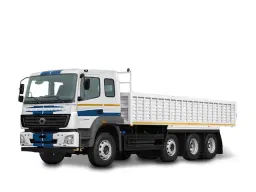
Bharat Benz 3123R
₹40.97 Lakh Onwards
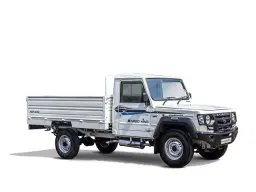
Force Kargo King
₹6.49 Lakh Onwards
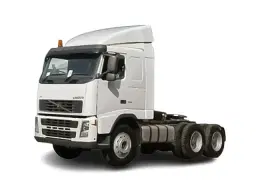
Volvo FM 440 6x4
₹70.00 Lakh Onwards