
Right Truck Payload for Your Business: 900 kg to 2 Tonne

The right truck payload for your business is the one that carries your heaviest regular load without crossing the legal limit, and in India that range runs from the 900 kg Tata Ace Gold+ diesel, priced from ₹5.52 lakh ex-showroom, to two-tonne pickups that cost nearly double. Get it wrong in November 2026 and you either pay EMI on capacity you never use or pay overloading fines on a truck that was too small.
What Payload Means on Indian Roads
Payload is the cargo weight a truck can legally carry, and it equals the Gross Vehicle Weight (GVW) minus the kerb weight. Everything you add, from a steel deck and side rails to a tarpaulin frame or an insulated box, eats into that number, so a truck rated for 900 kg on paper may safely carry less once the body is built. Overloading is the expensive mistake: under the Motor Vehicles Act the penalty is ₹20,000 plus ₹2,000 for every extra tonne, and the driver can be made to offload the excess before the truck moves again. The softer costs hurt too, because an overloaded mini truck runs hot on a flyover gradient, wears its clutch and tyres faster, and burns noticeably more diesel.
How to Pick the Right Truck Payload for Your Load
Start with the heaviest consignment you carry at least twice a month, not the average one, and add a 10 to 15 percent margin. Then check what that load is made of. Dense cargo such as cement, tiles, steel or LPG cylinders reaches the payload limit long before the deck is full: twenty 50 kg cement bags already weigh 1,000 kg, which is more than any 900 kg mini truck can legally take. Light, bulky cargo such as poultry crates, packaged snacks or e-commerce cartons does the opposite and fills the load body first, so deck length matters more than the payload figure. Traders who mix both kinds of cargo should size for the dense load. A sensible target is for your usual peak load to use 80 to 90 percent of rated payload, which leaves room for the occasional heavy day without a fine. If you are unsure, weigh a typical loaded trip at a local weighbridge before you commit to a purchase.
Mini Trucks: Tata Ace Gold+ at 900 kg
The Tata Ace Gold+ diesel suits intra-city distribution of up to roughly 800 kg, such as vegetables, bottled water, garments and courier parcels. It runs a turbocharged diesel making about 22 hp and 55 Nm, carries 900 kg, and Tata claims close to 22 kmpl. Real-world mileage with a full load in stop-start traffic is likely closer to 18 kmpl, which at 100 km a day over 26 working days means roughly 144 litres, or about ₹13,700 a month at ₹95 a litre diesel. On-road price in Delhi or Mumbai will likely land near ₹6.1 to ₹6.3 lakh. Financing the ex-showroom price with 20 percent down at 11 percent interest over 60 months gives an EMI of about ₹9,600, which is manageable for a single-truck owner-driver.
1.5-Tonne Pickups: The Sweet Spot for Growing Fleets
Once your peak load crosses 800 kg regularly, the 1.5-tonne pickup is the logical step, and three trucks dominate this class. The Mahindra Bolero Maxx City 1.5 uses a 2.5-litre four-cylinder diesel with 70 hp and 200 Nm, an 8.6-foot deck and a long wheelbase that keeps it stable at highway speeds, with prices from about ₹7.7 lakh. The Tata Intra V50 has a 1.5-litre engine making around 79 hp, a longer 9.8-foot deck, and costs roughly ₹8.7 to ₹8.9 lakh. The Ashok Leyland Dost+ also carries 1,500 kg and starts near ₹7.7 lakh depending on the variant, making it the cheapest way into this class. All three claim the same payload, so choose by deck length, engine response and the service network in your district.
Here is what the step up costs. Financing a Bolero Maxx City at ₹7.73 lakh on the same terms means an EMI near ₹13,400, about ₹3,800 more than the Ace Gold+, and a loaded fuel bill of roughly ₹18,000 a month at 13.5 kmpl, about ₹4,300 more. That adds up to roughly ₹8,000 a month extra for 67 percent more payload. If the bigger truck adds even one full trip a week, or lets you stop turning away heavy orders, it pays for itself; if your loads stay under 700 kg, it never will. Our Tata Ace EV vs Ace Gold diesel comparison covers the running-cost side of the smallest segment in more detail, and our commercial vehicle earning potential guide shows how trip counts change the maths.
When Two Tonnes Make Sense
Go beyond 1.5 tonnes only when your cargo is dense and your routes are long enough to justify it. The Mahindra Bolero Maxx HD 2.0 carries 2,000 kg with 80 hp and 200 Nm on a roughly 10-foot deck and starts around ₹10.6 lakh, while Ashok Leyland’s Bada Dost range carries about 1.9 to 2.1 tonnes depending on the variant, from around ₹8.2 lakh. These trucks are heavier, burn more diesel and need a driver comfortable with a longer wheelbase in city traffic. Buying capacity just in case is how small fleets end up with idle metal on the road; for loads that rarely cross 1.2 tonnes, the 1.5-tonne class stays the cheaper and more flexible answer.
The verdict is simple. If your heaviest regular load stays under 800 kg and you work mostly inside the city, the Ace Gold+ is the lowest-risk start. If you touch 900 kg more than occasionally, or carry dense goods, buy a 1.5-tonne pickup: the Intra V50 for deck space, the Bolero Maxx City for stability, the Dost+ for the lowest entry price. Settle the right truck payload first, then check the on-road price and EMI for your shortlisted truck in your city on Drivio.


Popular Trucks
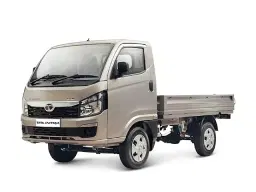
Tata Intra v10
₹7.28 Lakh Onwards
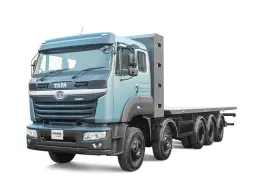
Tata Prima 35.K Auto Shift
Price to be announced
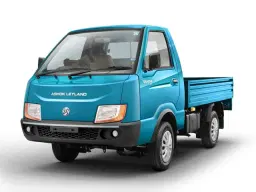
Ashok Leyland Saathi
₹6.50 Lakh Onwards
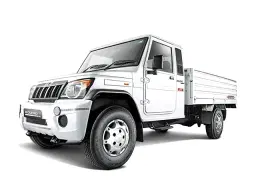
Mahindra Bolero PIK UP FB 1.3T - PS AC
₹10.48 Lakh Onwards
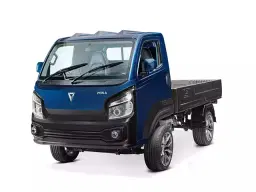
Omega Seiki M1ka
₹15.00 Lakh Onwards
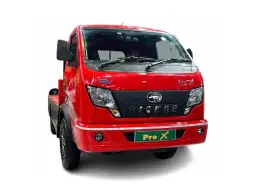
Eicher Pro x
₹17.49 Lakh Onwards
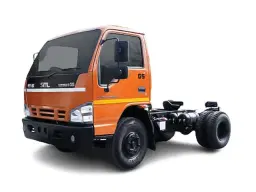
Swaraj Mazda Samrat GS Tipper Chassis
₹21.24 Lakh Onwards
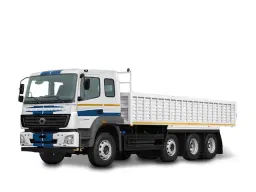
Bharat Benz 3123R
₹40.97 Lakh Onwards
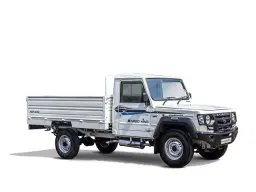
Force Kargo King
₹6.49 Lakh Onwards
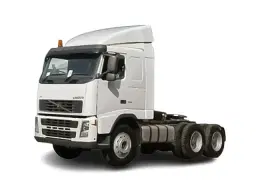
Volvo FM 440 6x4
₹70.00 Lakh Onwards