
Best Trucks for Vegetable & Fruit Transport from ₹5.52 Lakh

The best trucks for vegetable and fruit transportation in India now start at ₹5.52 lakh ex-showroom, and with winter vegetables arriving in the mandis this October 2026, a few hundred kilos of payload decide whether a trader earns or bleeds. Overload a pickup with tomato crates on a broken state highway and you pay twice, once in damaged stock and again in the challan. This guide compares the three vehicles that realistically do the job, the Tata Ace Gold+, the Tata Intra V30 and the Mahindra Bolero Pik-Up, on payload, running cost and price.
Which Trucks for Vegetable and Fruit Transportation Make Sense?
Produce is bulky before it is heavy. Cauliflower, leafy greens and mangoes in ventilated crates fill the deck long before they reach the weight limit, so loading length and body type matter as much as the payload figure. A 1,300 kg payload, for instance, works out to roughly 65 fruit crates of 20 kg each. Most traders also need a vehicle narrow enough for mandi lanes and frugal enough on diesel to survive thin margins, which is why small commercial vehicles under ₹10 lakh dominate this work. Insulated or refrigerated bodies are an aftermarket add-on in this class, and their weight eats directly into payload, so factor that in before you settle on a GVW.
Tata Ace Gold+: the cheapest way into produce hauling
The Tata Ace Gold+ diesel launched at ₹5.52 lakh ex-showroom under the revised GST norms and carries a 900 kg payload. That is enough for about 45 crates of 20 kg fruit, or a deck of vegetable sacks for retail drops within a city. The on-road price in Delhi will likely be around ₹6.4 lakh, and on our standard finance terms (20 per cent down, 60 months, 11 per cent interest) the monthly EMI works out to roughly ₹9,600. Its compact footprint is the real advantage in crowded wholesale markets and narrow residential lanes where a bigger pickup cannot turn. The trade-off is range of work: with 900 kg on board, long highway runs to a distant mandi will feel strained. If you are weighing it against the electric version, our Tata Ace EV vs Ace Gold Diesel comparison covers the running-cost maths.
Tata Intra V30: the all-rounder for mandi-to-market runs
The Tata Intra V30 is the sensible default for anyone moving produce daily. Its 1,496 cc diesel makes 70 hp and 140 Nm between 1,800 and 3,000 rpm, paired to a 5-speed gearbox, with a 1,300 kg payload on a 2,565 kg GVW. Prices start from about ₹7.47 lakh ex-showroom, with high-deck variants costing more, and the on-road price in Delhi or Mumbai will likely land near ₹8.6 lakh. The EMI on the base model comes to around ₹13,000 a month. Torque that arrives early helps when you are climbing a loaded ghat section or pulling out of a muddy mandi yard, and the 35-litre tank covers a full working day. Real-world mileage runs between 14 and 17 kmpl depending on load and traffic; at 15 kmpl over 2,600 km a month (100 km a day, 26 working days), the diesel bill is close to ₹16,500 at ₹95 per litre.
Mahindra Bolero Pik-Up: for rough roads and longer hauls
The Mahindra Bolero Pik-Up costs more but earns it on bad roads. After its January 2026 refresh, prices run from ₹9.19 lakh for the base variant to ₹9.99 lakh for the AC versions, with payload options of 1.3 tonne and 1.7 tonne. The on-road price in Delhi starts around ₹10.6 lakh, with an EMI near ₹16,000 on the base model. A 57-litre tank gives long range for farm-gate collection from villages, and the 2WD claims up to 17 kmpl while the 4WD drops to about 13 to 14 kmpl. Operators who want Bolero toughness on a tighter budget should look at the Bolero MaXX Pik-Up City, which starts around ₹7.73 lakh with payload options of 1,300 to 1,500 kg and goes head to head with the Intra V30.
Price, payload and EMI compared
Among trucks for vegetable and fruit transportation under ₹10 lakh, the numbers separate the three quickly.
The Intra V30 carries 400 kg more than the Ace Gold+ for roughly ₹2 lakh extra. Those 400 kg equal about 20 more fruit crates per trip, which likely justifies the ₹3,400 higher monthly EMI for anyone running two or more loads a day. Our commercial vehicle earning potential breakdown shows how to model that against your own route.
Verdict
For most traders, the Tata Intra V30 is the pick among trucks for vegetable and fruit transportation in this price band, because it balances payload, torque and running cost without the Bolero’s higher entry price. Choose the Ace Gold+ if your loads stay under 900 kg and your routes are short, crowded city lanes. Choose the Bolero Pik-Up if village roads, ghats or a 1.7-tonne payload are part of your weekly schedule. Whichever you shortlist, never plan a load beyond the rated payload; it costs more in tyres, clutches and fines than the extra trip would. Check the on-road price and EMI for the Tata Intra V30 in your city on Drivio before you sign the dealer quote, since state road tax and body-building charges shift the final figure from one city to the next.


Popular Trucks
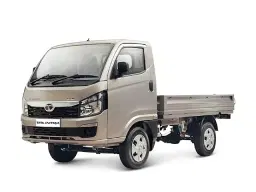
Tata Intra v10
₹7.28 Lakh Onwards
Tata Prima 35.K Auto Shift
Price to be announced
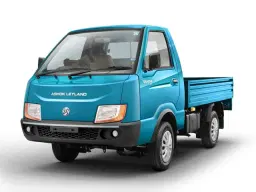
Ashok Leyland Saathi
₹6.50 Lakh Onwards

Mahindra Bolero PIK UP FB 1.3T - PS AC
₹10.48 Lakh Onwards
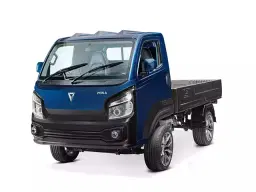
Omega Seiki M1ka
₹15.00 Lakh Onwards
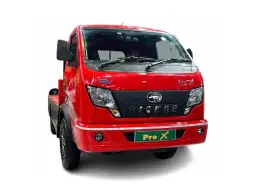
Eicher Pro x
₹17.49 Lakh Onwards
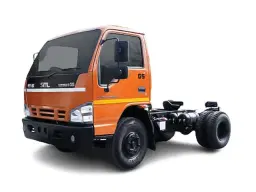
Swaraj Mazda Samrat GS Tipper Chassis
₹21.24 Lakh Onwards
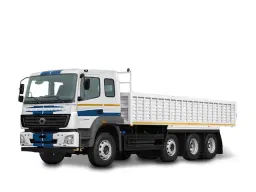
Bharat Benz 3123R
₹40.97 Lakh Onwards
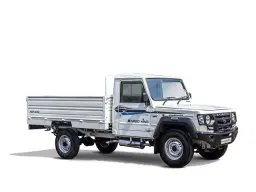
Force Kargo King
₹6.49 Lakh Onwards
Volvo FM 440 6x4
₹70.00 Lakh Onwards