Is Buying a Truck a Good Business in 2026?
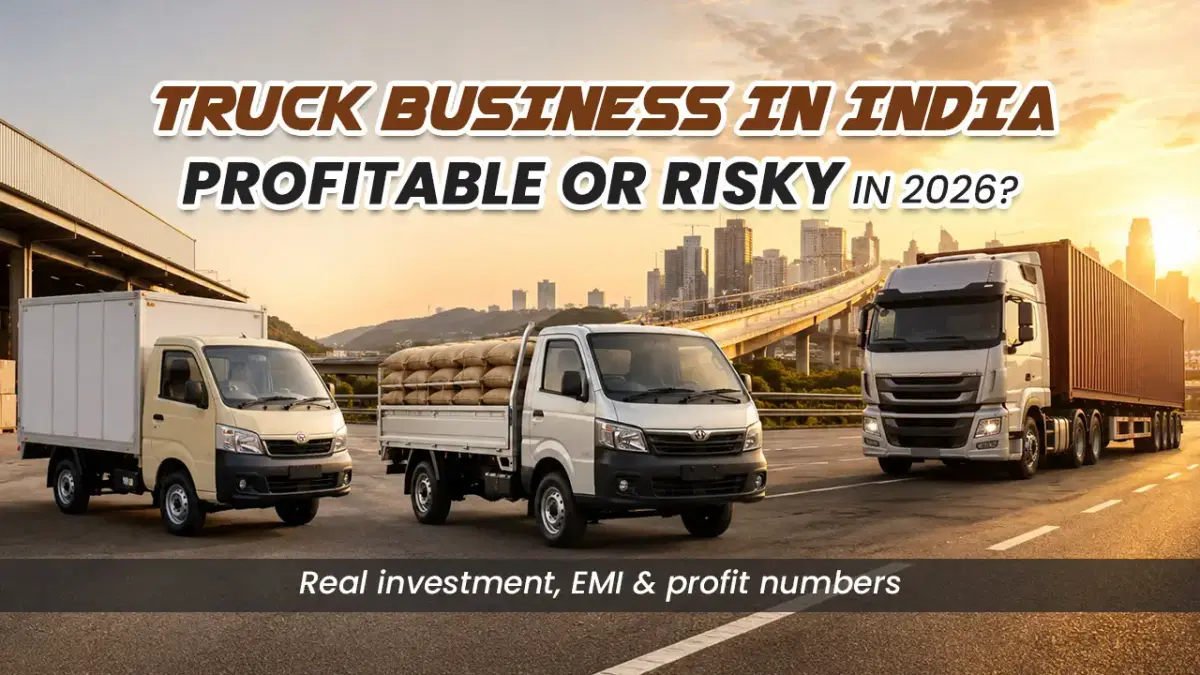
Buying a truck a good business question has a direct answer for Indian operators heading into 2026: it can be, provided you go in with realistic numbers rather than showroom enthusiasm. Entry costs in India start around ₹5 lakh–₹10 lakh for a small commercial vehicle, climb to ₹7 lakh–₹12 lakh for a pickup truck, and reach ₹20 lakh–₹45 lakh+ for a medium or heavy truck. What changes the calculation for 2026 is the sheer volume of freight moving through e-commerce hubs, construction sites, and FMCG distribution networks in Indian cities — demand that rewards owners who understand cost structure over those chasing headline income figures.
Is Truck Business Profitable in India in 2026?
Yes, but profitability in the truck business in India depends far more on route quality and vehicle utilisation than on which brand badge sits on the bonnet. E-commerce logistics alone now generates steady daily-load demand in most tier-1 and tier-2 cities, while construction material movement, agricultural transport, and local goods delivery keep mini trucks and pickups busy through most of the year. A truck parked for ten days a month earns nothing regardless of how efficient its engine is, which is why utilisation and driver reliability matter as much as EMI in any given month. The honest framing is that the truck business in India rewards consistent operators and punishes anyone who buys first and figures out the route later.
Buying a Truck a Good Business: What the Numbers Actually Say
The gap between what a truck appears to earn and what an owner actually keeps is where most new operators get their expectations wrong. A pickup or mini truck running daily city routes can generate a respectable gross monthly revenue, but diesel, EMI, driver salary, tyre wear, tolls, insurance, and permit costs all come out of that figure before anyone calls it profit. This is the real test behind whether buying a truck a good business decision turns out to be for a given buyer — not the headline income number agents quote, but what remains after every recurring cost is paid. Anyone evaluating commercial truck profit should build their own monthly sheet rather than trusting a verbal promise from a dealer or broker.
How Much Investment Do You Need to Start a Truck Business?
A small commercial vehicle — the category that includes compact load carriers used for last-mile city delivery — typically needs around ₹5 lakh–₹10 lakh depending on body type and financing terms. A pickup truck sits a notch higher at roughly ₹7 lakh–₹12 lakh, often the preferred entry point for owner-drivers handling FMCG, agricultural produce, or local goods movement. Medium and heavy trucks for inter-city and bulk construction material haulage run from ₹20 lakh to ₹45 lakh or more, and buyers comparing the best mini trucks in India for last-mile work should expect on-road prices in Delhi or Mumbai to sit meaningfully above ex-showroom figures once registration, insurance, road tax, permit charges, and any body-building work are added in.
Realistic Truck Monthly Income and Profit in India
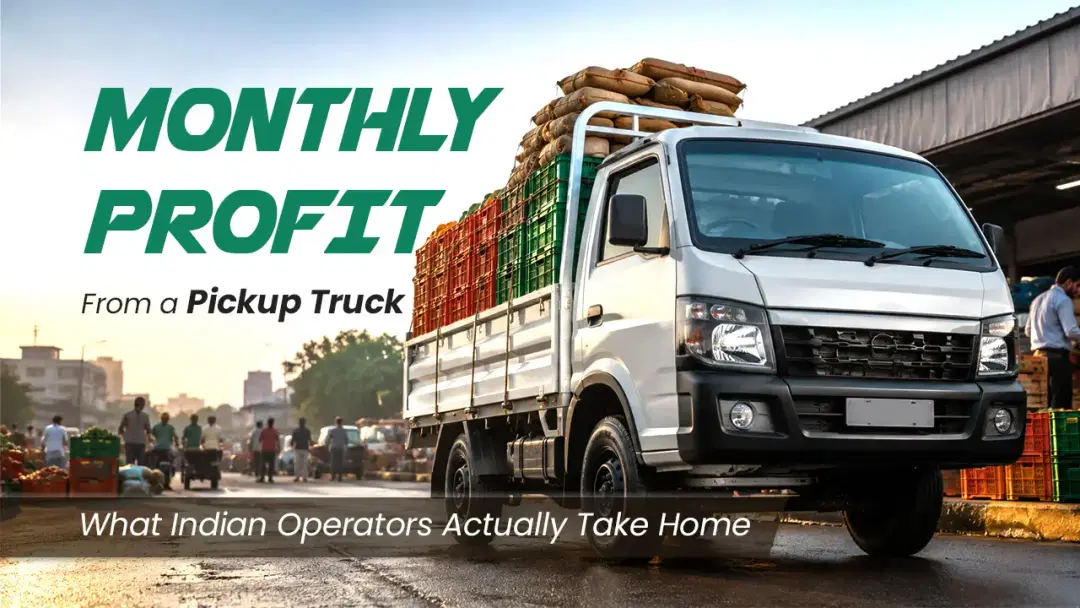
Approximate monthly income for a well-utilised mini truck or pickup — in the same range owners typically report for popular load carriers like the Tata Ace — running consistent city or short-haul routes can fall in a reasonable working range once fuel, EMI, and driver costs are accounted for, though the actual figure depends heavily on route, load type, and how many days the vehicle stays on the road. An owner-driver who handles the vehicle personally usually retains noticeably more profit than someone paying a hired driver, since the salary line disappears entirely. Route contracts with consistent monthly cargo — rather than relying on daily spot loads — tend to produce far steadier income than chasing whatever freight happens to be available that day. Downtime, more than mileage, is typically what separates an average month from a strong one.
Monthly Cost Calculation: EMI, Diesel, Driver and Maintenance
Take a pickup truck running daily local delivery routes as a working example. Against a realistic monthly gross revenue, an owner needs to set aside diesel cost at around ₹95 per litre as seen in cities like Delhi, an EMI instalment on the truck loan, a driver's salary if one is hired, a maintenance and tyre provision, and an insurance and permit/tax allowance spread across the year. Once all of these are subtracted, what remains is the actual take-home profit — typically a modest but workable figure for a well-run owner-driver operation, and considerably thinner once a hired driver and a higher EMI are added to the same route. Building this calculation on paper before buying, using your own expected route and load, is far more useful than any number quoted in a brochure.
New Truck vs Used Truck: Which Makes More Sense in 2026?
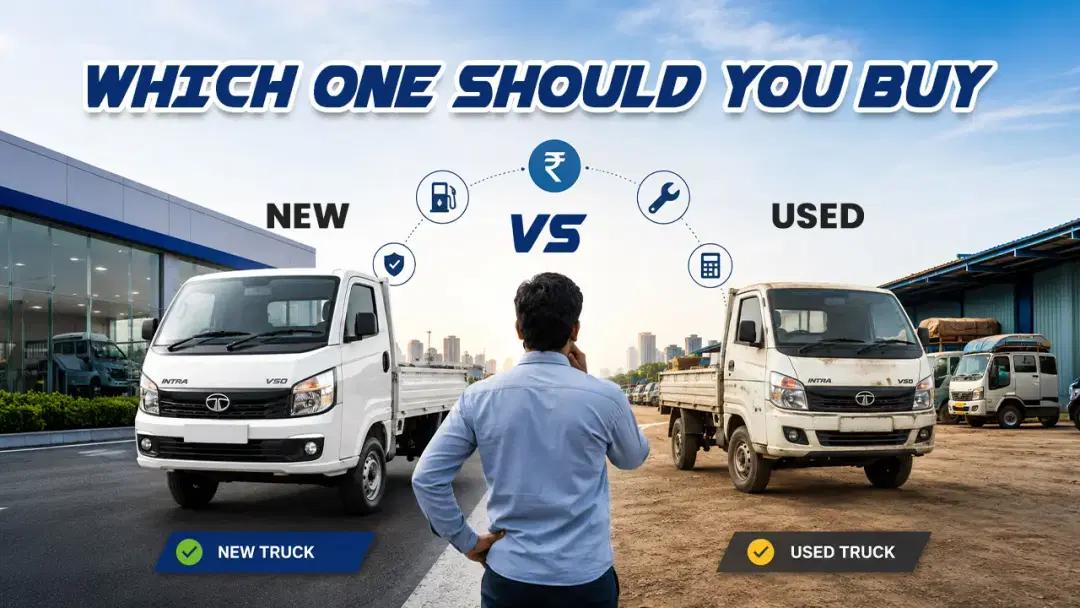
A new truck carries a higher EMI but comes with manufacturer warranty, better reliability in the early years, and lower breakdown risk — useful when your business depends on uninterrupted daily running. A used truck vs new truck comparison generally favours the used option on upfront cost and faster break-even, though buyers take on higher maintenance risk and the uncertainty of unknown prior usage. For first-time buyers with limited capital, a well-inspected used truck with verified service history is usually the more sensible entry point. Businesses with confirmed long-term contracts and steady cash flow are better positioned to absorb a new truck's EMI in exchange for reliability and resale value down the line.
Owner-Driver vs Hired-Driver Truck Business
An owner-driver truck business almost always keeps more of the gross income simply because there's no separate salary to pay out every month. The hired-driver model only works well when the truck runs enough days in a month and has strong, reliable load availability to justify the extra fixed cost — otherwise the salary becomes a drag on thin margins. Idle days hurt this model more than small drops in mileage or minor fuel price swings ever will, since EMI and driver salary are due whether the truck moves or not. Anyone scaling beyond one vehicle eventually has to weigh this trade-off carefully across their entire fleet.
What Can Go Wrong in the Truck Business?
Irregular load availability is the most common reason a seemingly profitable route stops paying for itself, particularly for owners depending on spot freight rather than contracts. Diesel price increases, EMI pressure during slow months, sudden tyre and maintenance costs, accident-related downtime, and delayed payments from clients can each erode a month's profit on their own — and a few of these landing together can genuinely hurt cash flow. None of this makes the truck business a poor choice; it simply means new buyers should keep a cash buffer for at least one or two slow months and avoid stretching EMI commitments to the maximum the bank will approve.
Verdict: Is Buying a Truck a Good Business in 2026?
Buying a truck can be a good business in 2026 for buyers who go in with confirmed routes, a realistic running-cost calculation, manageable EMI, and a vehicle sized correctly for the work they actually have lined up. It becomes risky mainly for people who buy on expected income without any load contract in hand, assuming the freight will simply turn up once the truck is registered. The buyers who do well treat this as a transport business first and a vehicle purchase second — checking the math before checking the showroom floor.
If you're weighing a small commercial vehicle, a pickup, or a medium/heavy truck for your own route, the numbers above are only a starting point. Check the on-road price and EMI for the right truck for your business in your city on Drivio.