
2024 Tesla Cybertruck Review | Best Commercial Vehicle in India (Concept)

Introduction
The Tesla Cybertruck, while primarily known as a personal vehicle, possesses the potential to revolutionize India's commercial sector. Imagine its futuristic design navigating bustling city streets, delivering goods with unparalleled efficiency and zero emissions. This vehicle, if adapted for the Indian market, could be a game-changer for logistics, last-mile delivery, and even specialized transport. We'll explore hypothetical variants tailored for commercial use, speculating on their target audiences.
Variant Overview
Assuming Tesla adapts the Cybertruck for India's commercial landscape, we can envision three key variants: a 'Last Mile Delivery' version, a 'Heavy Hauler' variant, and a passenger-focused 'E-Transport' edition. Each would cater to specific needs within the commercial vehicle segment, ranging from small package delivery to transporting goods over longer distances and providing a luxurious and emission-free transport solution.
| Variant | Price (Estimated) | Engine (Hypothetical) | Load/Passenger Capacity (Hypothetical) |
|---|---|---|---|
| Last Mile Delivery | ₹70 Lakhs | Dual Motor, AWD | 800 kg / 2 Passengers |
| Heavy Hauler | ₹85 Lakhs | Tri-Motor, AWD | 1500 kg / 2 Passengers |
| E-Transport | ₹90 Lakhs | Tri-Motor, AWD | 500 kg / 7 Passengers |
Key Features
The Cybertruck's potential as a commercial vehicle lies in its robust build, powerful electric motors, and projected fuel efficiency (electricity consumption, really). The focus here would be maximizing payload while minimizing operational costs. Electric powertrains offer significant savings on fuel and maintenance, a critical factor for commercial viability in India.
| Feature | Specification (Hypothetical) | Benefit |
|---|---|---|
| Motor | Dual/Tri Motor, AWD | High torque for heavy loads, superior grip |
| Torque | 800-1000 Nm | Excellent pulling power on inclines |
| Payload/Passenger | 500-1500 kg / 2-7 Passengers | Versatility for various applications |
Advanced Features
Beyond raw power, the Cybertruck would likely incorporate advanced safety systems and technology to enhance its appeal in the commercial sector. Features like enhanced autopilot, reinforced cargo bays, and comfortable interiors would provide a compelling package for businesses seeking efficiency and driver satisfaction. The stainless steel exoskeleton would add to durability and reduce downtime due to minor damages.
| Feature | Specification (Hypothetical) | Benefit |
|---|---|---|
| Braking System | Advanced regenerative braking | Increased efficiency, reduced wear on brake pads |
| Suspension | Adaptive air suspension | Adjustable ride height for varying loads and terrain |
| Technology | Enhanced Autopilot | Driver assistance, improved safety, reduced driver fatigue |
| Cargo Space | Secure and weatherproof | Protection of goods from weather and theft |
Competitive Analysis
If the Cybertruck enters the Indian commercial vehicle market, it would compete with established players like Tata Motors, Mahindra, and Ashok Leyland in the electric and premium diesel segments. The unique selling proposition would be its advanced technology, zero-emission operation, and futuristic design.
| Model | Price (Estimated) | Load/Passenger Capacity (Estimated) | USP |
|---|---|---|---|
| Tesla Cybertruck | ₹70-90 Lakhs | 500-1500 kg / 2-7 Passengers | Advanced technology, zero emissions |
| Tata Intra V50 (Diesel) | ₹8-9 Lakhs | 1500 kg / 2 Passengers | Affordability, widespread service network |
| Mahindra Jeeto Plus (CNG) | ₹5-6 Lakhs | 715 kg / 2 Passengers | Fuel efficiency, compact size |
| Ashok Leyland Bada Dost | ₹7-8 Lakhs | 1400 kg / 2 Passengers | Strong engine, durable build |
Conclusion
The Tesla Cybertruck, as a commercial vehicle in India, represents a bold and futuristic vision. Its strengths lie in its potential for zero-emission operation, advanced technology, and robust build. However, its high price point and the need for robust charging infrastructure could be significant challenges. This vehicle would likely appeal to logistics companies and transport operators focused on sustainability, technological innovation, and attracting skilled drivers. The Cybertruck is not a commercial vehicle in India today, but this exercise highlights the possibilities for electric vehicles in the commercial market.
Pro Tips:
- Prioritize charging infrastructure assessment before investing.
- Consider long-term operational cost savings compared to initial investment.
- Explore government incentives for electric commercial vehicles.
Manufacturer Quote (Hypothetical):
"Our vision is to transform transportation, and the Cybertruck's adaptability makes it a strong contender for revolutionizing commercial fleets globally," – Elon Musk (Imagined).



Popular Trucks
Tata Intra v10
₹7.28 Lakh Onwards
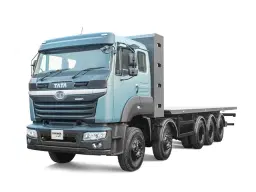
Tata Prima 35.K Auto Shift
Price to be announced
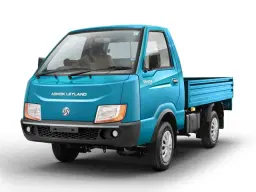
Ashok Leyland Saathi
₹6.50 Lakh Onwards
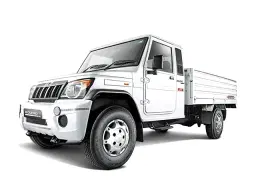
Mahindra Bolero PIK UP FB 1.3T - PS AC
₹10.48 Lakh Onwards
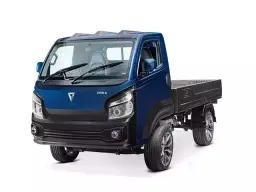
Omega Seiki M1ka
₹15.00 Lakh Onwards
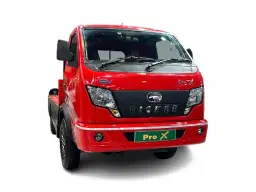
Eicher Pro x
₹17.49 Lakh Onwards
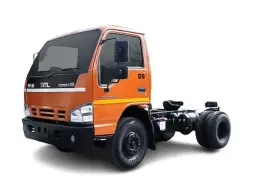
Swaraj Mazda Samrat GS Tipper Chassis
₹21.24 Lakh Onwards
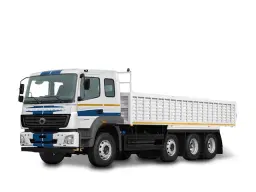
Bharat Benz 3123R
₹40.97 Lakh Onwards
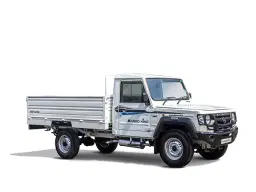
Force Kargo King
₹6.49 Lakh Onwards
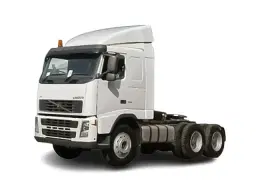
Volvo FM 440 6x4
₹70.00 Lakh Onwards